Overview
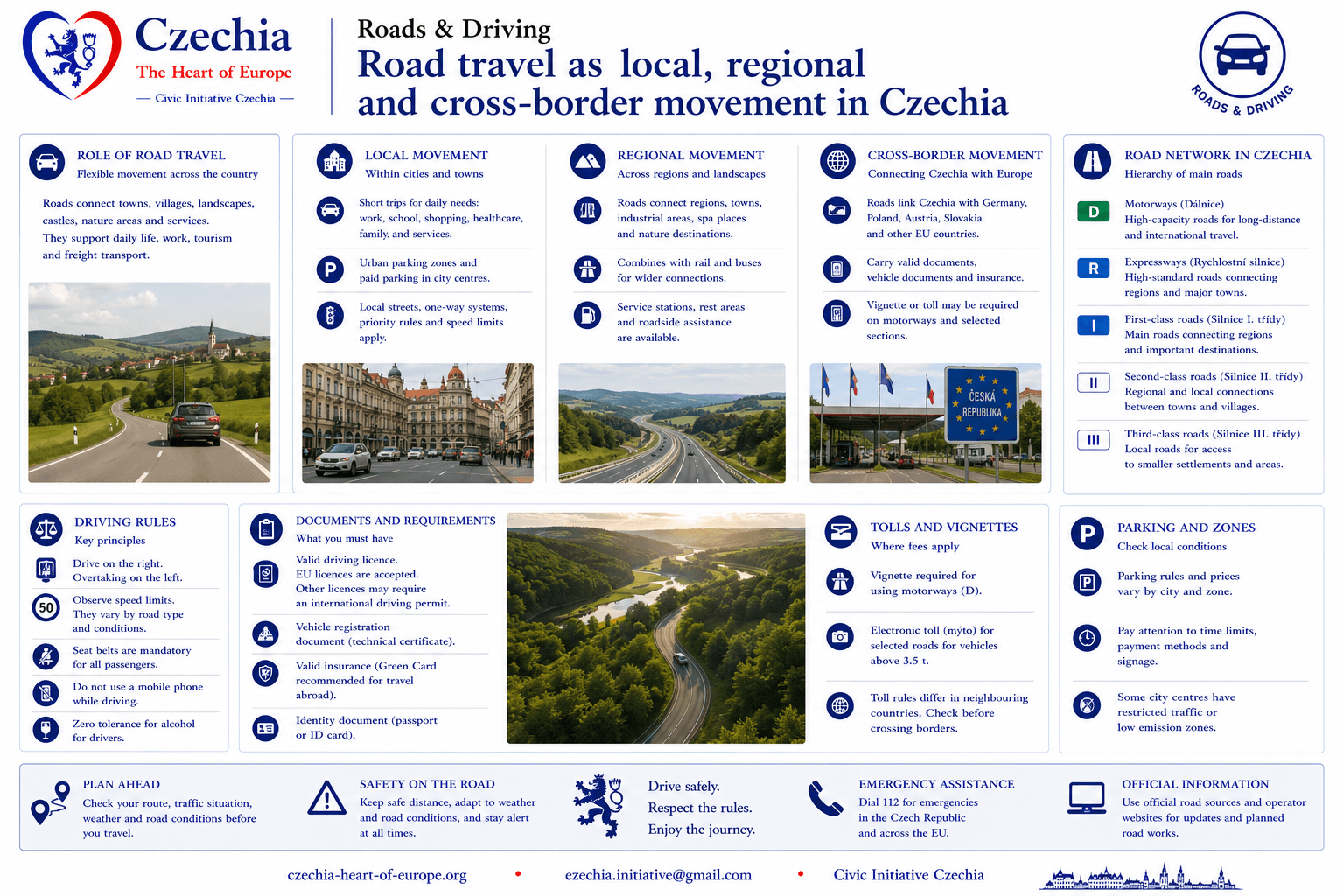
Road travel as local, regional and cross-border movement
Roads in Czechia connect cities, villages, industrial areas, border regions, airports,
tourist places, mountain areas and everyday services. Driving may mean a short local trip,
a regional journey, a motorway transfer, a rental-car itinerary or cross-border movement.
Practical road orientation begins with the road type, vehicle, road-fee requirement, parking
rules, weather conditions and local restrictions. Motorways, urban streets, historic centres,
mountain roads and border routes create different driving situations.
Local roads
Towns, streets and services
Local driving involves parking zones, pedestrian areas, one-way streets, deliveries and public-space rules.
Regional roads
Villages, landscapes and towns
Regional driving connects smaller places, castles, spa towns, mountain areas and rural services.
Motorways
Longer and cross-border movement
Motorways and major roads support business, tourism, logistics, airport access and international movement.
Road types
Motorways, main roads and local streets
A road trip in Czechia may move through several different road environments: motorways,
first-class roads, regional roads, urban streets, residential streets, mountain roads or
historic-centre restrictions. Speed, parking, signage, road quality and traffic pressure
can change quickly between them.
Motorways
Long-distance movement
Useful for major city links, airport transfers, business travel, freight and cross-border routes.
Main roads
Regional and intercity routes
Connect towns, industrial zones, border areas, tourist places and motorway access points.
Local streets
Parking and access rules
Urban centres can include restricted zones, paid parking, resident parking and delivery limits.
Vignettes and fees
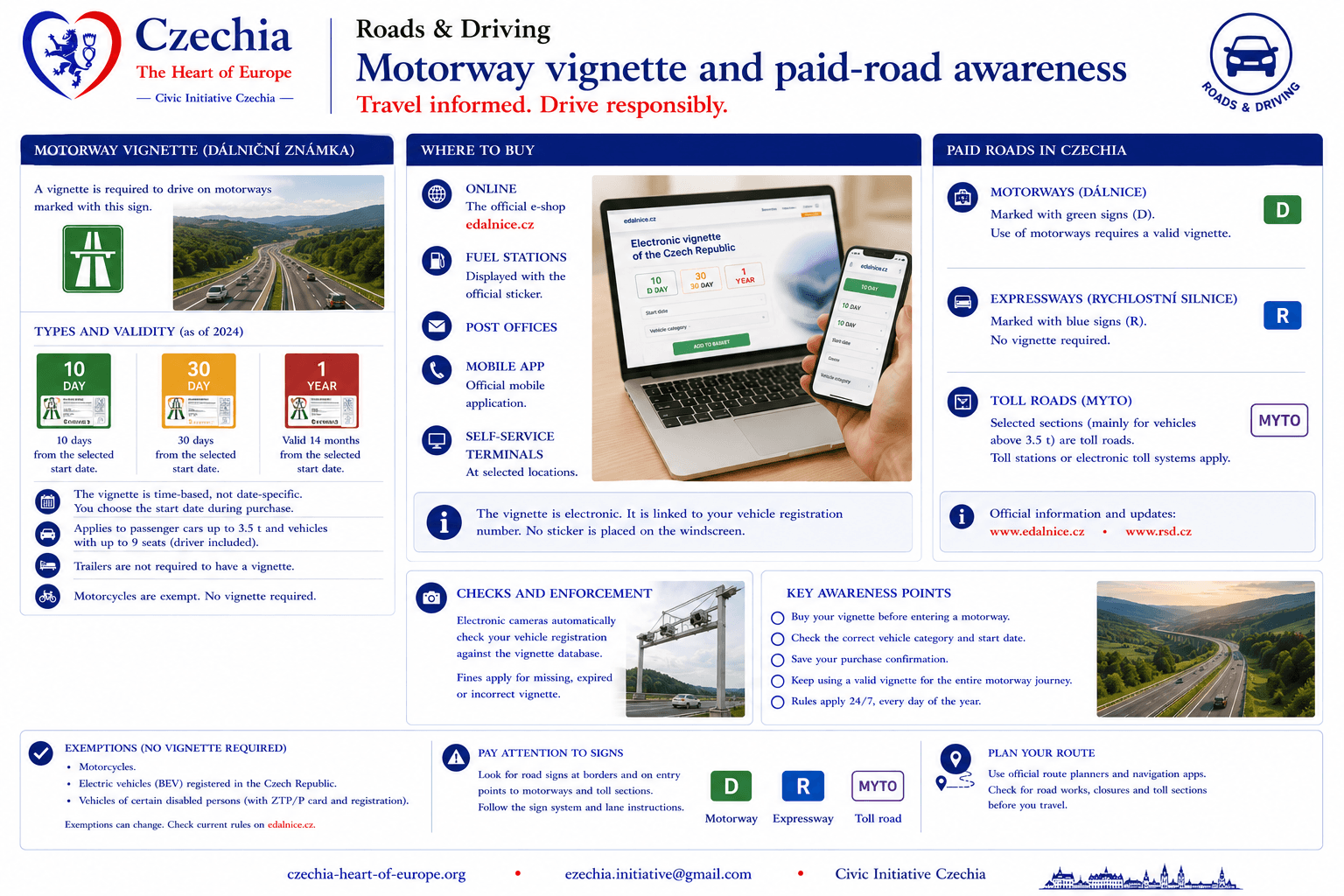
Motorway vignette and paid-road awareness
Some motorway use requires an electronic vignette for eligible vehicles. The vignette is linked
to the vehicle registration plate and selected validity period. Before using a motorway, drivers
should check whether their vehicle category, route and road section require payment.
Vignettes should be bought through the official service or official sales points. Third-party
websites may add fees or create confusion, especially for visitors searching quickly from abroad.
Vehicle
Check the vehicle category, weight, registration plate and fuel or exemption conditions.
Route
Confirm whether the route uses a paid motorway section or only ordinary roads.
Validity
Select the correct validity period and start date before payment.
Plate
Enter the registration plate carefully; mistakes can make the vignette unusable for the intended vehicle.
Proof
Keep the confirmation accessible, especially when travelling with a rental car or crossing borders.
Road-fee rule: buy only through the official eDalnice service or official sales points.
Avoid unofficial pages that add unnecessary service charges or imitate official purchase flows.
Vehicle use
Documents, rentals and vehicle checks
Driving or renting a car requires more than the route itself. The driver should have the required
licence, rental agreement where applicable, vehicle documents, insurance information and emergency
contact details. Rental cars also require a careful check of fuel policy, damage record, motorway
vignette status and cross-border permission.
Licence and ID
Driver and document match
Carry the correct driving licence and identity document required for the driver and rental contract.
Rental car
Contract, damage and fuel
Check the vehicle condition, fuel policy, mileage, deposit, insurance and return location.
Cross-border travel
Permission matters
Rental vehicles may require explicit permission or insurance coverage for travel outside Czechia.
Parking
Parking zones, garages and local rules
Parking rules are local. Prague, Brno and other cities can use paid zones, resident zones,
short-term parking, private garages, shopping-centre parking, hotel parking or restricted
historic-centre access. A valid parking place in one district or town does not imply the same
rule elsewhere.
Before leaving the vehicle, check the sign, colour zone, payment method, time limit, resident
restriction, weekend or evening rule, and whether the place belongs to a public street, private
car park, garage or business premises.
Street parking
Signs and zones
Read the local sign before paying or leaving the car; street rules can change by zone and time.
Garages
Safer for city visits
Garages can reduce stress in historic centres, large cities and busy tourist areas.
Accommodation
Ask before arrival
Hotels, apartments and rentals may require advance parking reservation or separate payment.
Fuel and charging
Fuel stations, charging and route breaks
Fuel stations are common on motorways, major roads and near towns, but spacing and opening hours
can vary on regional or rural routes. Electric-vehicle charging depends on provider network,
connector type, payment method, availability and location.
Fuel
Plan before rural routes
Check fuel level before mountain, border, late-night or rural trips.
Charging
Provider and connector
Confirm charger type, payment access and live availability before relying on a stop.
Breaks
Driver fatigue matters
Use service areas, towns or safe parking places for rest, toilets, water and route checks.
Weather
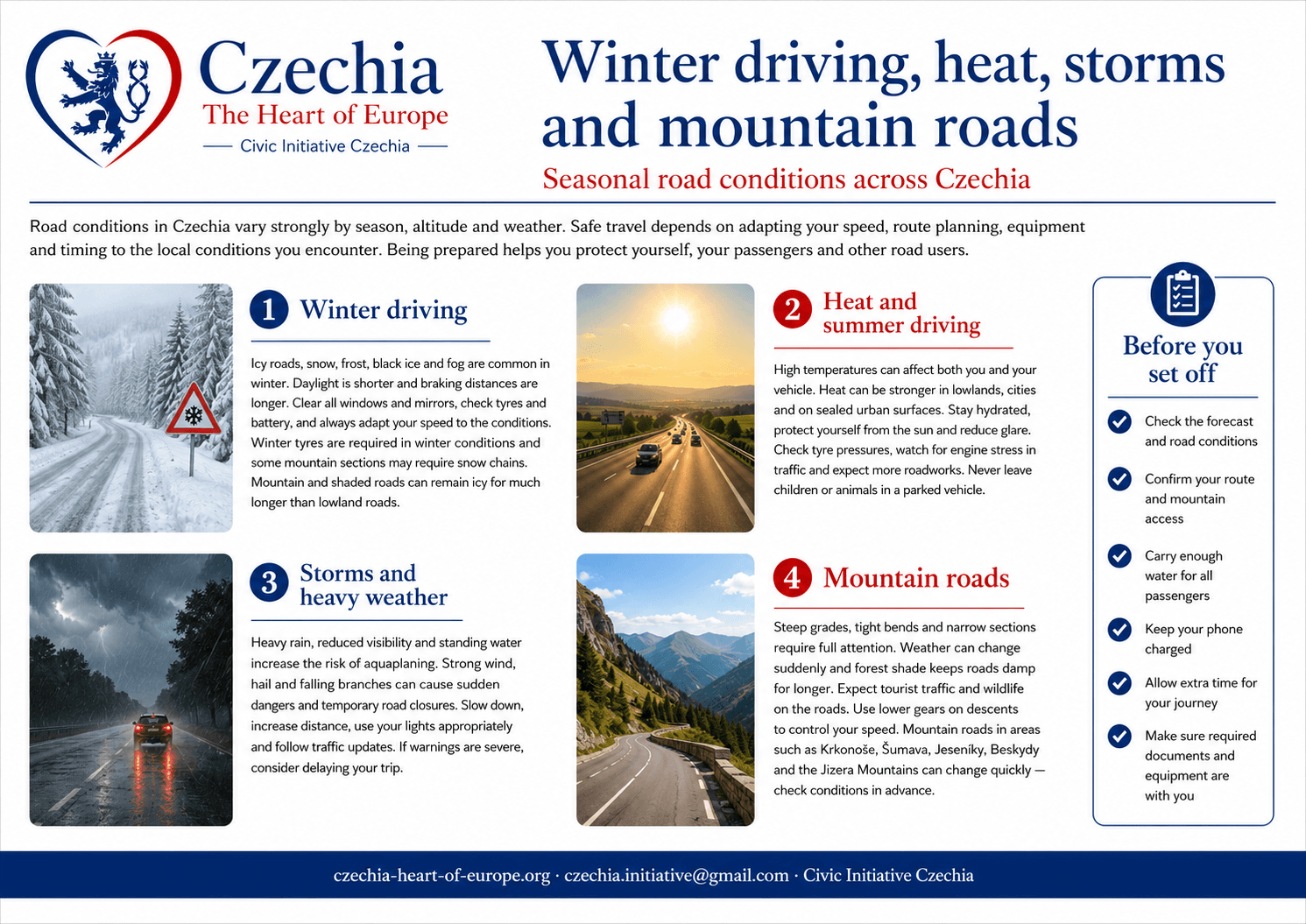
Winter driving, heat, storms and mountain roads
Driving conditions change with season, altitude and weather. Mountain areas, forested roads,
bridges, shaded bends and rural sections can become difficult in snow, ice, fog, heavy rain,
wind or heat. Winter preparation is part of road safety.
Before winter or mountain travel, check weather, road restrictions, tyre requirements, fuel or
battery range, lights, wipers, washer fluid, phone charge and emergency supplies. In summer,
heat and storms can affect driver concentration, children, animals, road surfaces and visibility.
Winter
Snow, ice and visibility
Prepare for slower travel, longer braking distance, road closures and mountain restrictions.
Storms
Rain, wind and fallen branches
Heavy rain and wind can affect visibility, braking, trees, cyclists, pedestrians and road debris.
Heat
Fatigue and parked vehicles
Heat affects drivers, children, animals, medication, hydration and parked-car safety.
Safety
Breakdowns, accidents and roadside situations
Roadside incidents require distance, visibility and calm order. A breakdown, flat tyre, minor
collision, animal on the road, sudden illness, blocked lane or accident near the vehicle can
become dangerous if people stand in traffic space or remain invisible.
Stop safely
Move out of traffic when possible and avoid stopping in blind or exposed places.
Make visible
Use lights, warning equipment and safe positioning according to the situation.
Protect people
Move passengers away from traffic and protect children, older people and vulnerable travellers first.
Call help
Use emergency numbers, assistance service, police or rental-company contact depending on severity.
Record facts
Keep location, vehicle plate, rental details, insurance information and photos only where safe and appropriate.
Safety priority: in a road incident, people and visibility come before luggage, photos,
blame, repair attempts or argument.
Cross-border movement
Driving to and from neighbouring countries
Czechia borders Germany, Poland, Slovakia and Austria. Cross-border driving can involve different
motorway-fee systems, emission or city-access rules, rental-car conditions, insurance requirements,
winter equipment, speed rules and road-sign differences.
Before crossing a border by car, check the rules for the next country as well as Czech requirements.
A valid Czech vignette, rental permission or parking habit does not automatically cover the neighbouring
country.
Neighbouring rules
Each country differs
Check road fees, parking, winter equipment and city-access rules before crossing.
Rental cars
Cross-border permission
Confirm written permission, insurance and fees before leaving Czechia in a rental vehicle.
Return route
Allow time
Border areas, mountain roads, fuel stops and traffic restrictions can affect the return journey.
Practical situations
Roads & driving FAQ
Do I need a vignette for every road?
No. The requirement depends on the road section and vehicle category. Check the official eDalnice service before using motorways or planned paid-road sections.
Can I buy a vignette after entering the motorway?
Buy before using a paid section. The vehicle plate, validity period and start date must be correct before the journey on a paid road.
Is parking the same in every Czech city?
No. Parking is local. Check the street sign, zone, payment method and time rule in the exact place where the car is parked.
Can a rental car cross the border?
Only if the rental conditions allow it. Confirm cross-border permission, insurance and any country-specific fees before leaving Czechia.
Are mountain roads different in winter?
Yes. Weather, tyre requirements, snow, ice, closures and visibility can change mountain routes quickly. Check conditions before departure.
What should I do after a breakdown?
Move out of traffic if possible, make the vehicle visible, keep passengers safe, avoid standing in the road, and call the appropriate assistance or emergency contact.
Are fuel and charging points everywhere?
Fuel stations are common on major routes, but rural, mountain or late-night trips need more planning. EV charging should be checked by provider, connector and live availability.
Official references
Primary roads and driving references
Use official sources for motorway vignettes, current road information, transport policy,
road assistance context and public administration references.
Transport pages
Continue by transport topic
Transport overview
Transport in Czechia
Country-level orientation to public transport, rail, roads, airports, regional mobility and safety.
Public transport
City and local systems
Metro, trams, buses, trolleybuses, tickets, validation, inspections and passenger rules.
Rail
National, regional and international rail
Trains, stations, tickets, operators, reservations and rail travel.
Airports
Air travel and arrivals
Airports, arrivals, transfers, airport-city links and passenger orientation.
Regional mobility
Movement beyond major cities
Regional buses, local connections, towns, castles, spa places and nature access.
Accessible mobility
Barrier-free and inclusive movement
Low-floor services, station access, mobility support, strollers and calm travel needs.
Cycling & walking
Soft mobility and public-space movement
Walking, cycling, shared mobility, bikes on trains and public-space safety.
Foreigners & newcomers
First transport orientation
Tickets, validation, inspections, useful words and common first-arrival mistakes.
Freight & logistics
Goods movement and corridors
Road freight, rail freight, logistics hubs, industry links and European corridors.
Safety & disruptions
Delays, closures and incidents
Replacement transport, weather disruption, lost property, emergency numbers and safety notices.