The Přemyslid period formed medieval Bohemia around Prague, Christian rule, dynastic legitimacy, saints, fortified power, royal elevation and the first durable structures of Czech statehood.
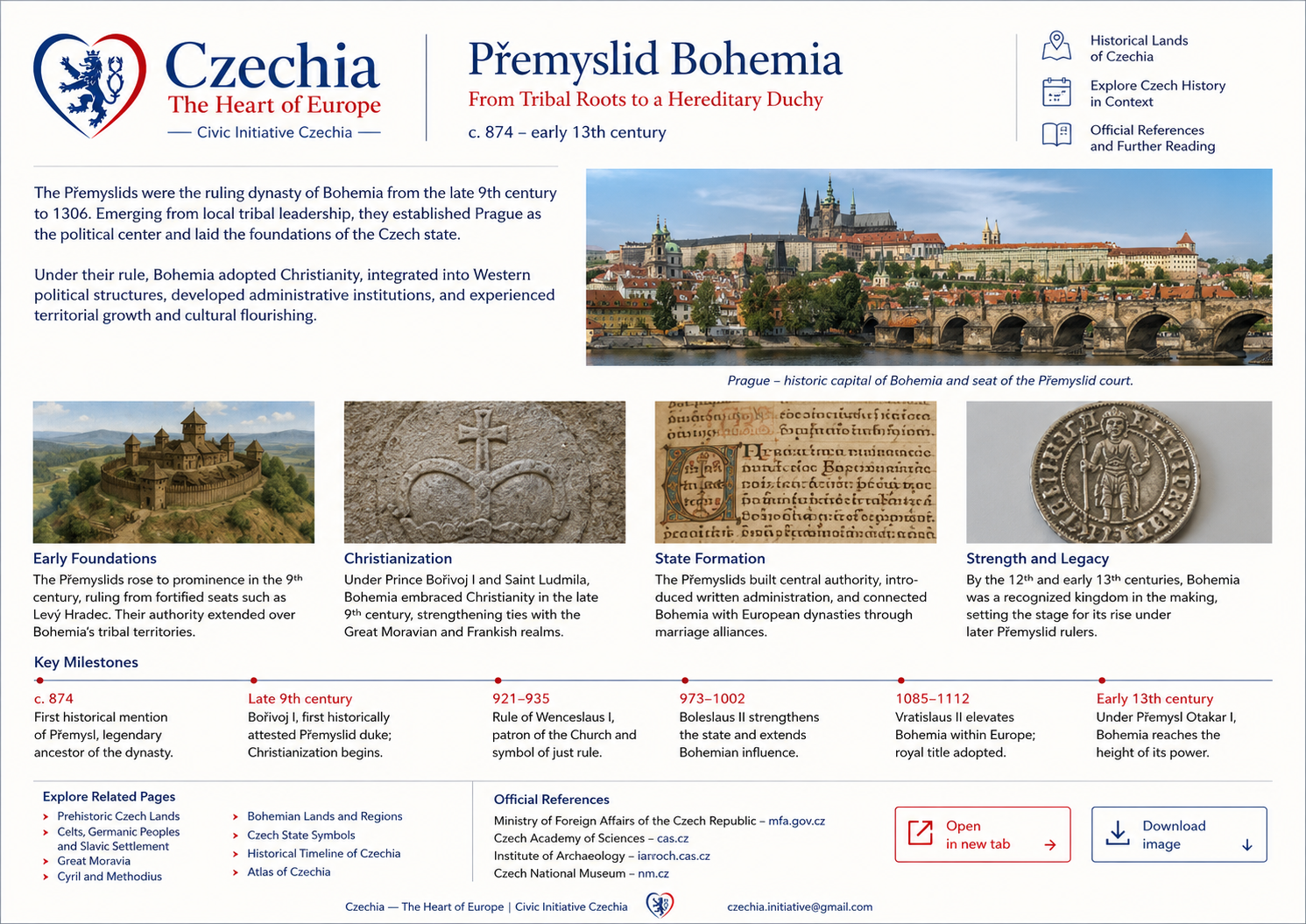
Přemyslid Bohemia marks the consolidation of a durable political centre in the Czech lands. From Prague and the surrounding strongholds, the Přemyslid dynasty built authority through dynastic succession, military power, Christian patronage, control of territory and relations with the Holy Roman Empire.
This period gives Czech history some of its most recognisable foundations: Prague Castle as a seat of rule, Saint Wenceslas as a ruler-saint, the bishopric of Prague, the rise of a medieval kingdom, and the idea of Bohemia as a political body with a lasting crown tradition.
The Přemyslid period is the bridge between early Slavic formations and the later medieval Kingdom of Bohemia. Its main line runs from local ducal power to royal dignity, from strongholds to a structured state, and from Christian conversion to a public culture centred on saints, churches, law, coinage and dynastic memory.
Prague centrePrague Castle became the political, religious and symbolic centre of Bohemian rule.
Dynastic legitimacyThe Přemyslids connected family rule, Christian authority and territorial control into a lasting state frame.
Royal BohemiaBy the thirteenth century, Bohemia had become a kingdom with growing European weight.
The Přemyslid rise followed the decline of Great Moravian power and the emergence of Bohemia as a stronger political centre. Přemyslid rulers controlled Prague and expanded authority across Bohemia while interacting with Moravia, neighbouring lands and imperial politics.
Christianity became a central instrument of public order. Churches, monasteries, saints, bishops and written administration gave rule a form that reached beyond personal power. The cult of Saint Wenceslas joined political legitimacy with moral memory and became one of the deepest symbols of Czech statehood.
Castle networkPower was organised through Prague and a wider system of fortified centres, estates and regional control.
Church institutionsThe Prague bishopric, monasteries and sacred places gave medieval rule religious and administrative depth.
Saint WenceslasHis memory connected rulership, martyrdom, protection of the land and the later idea of Czech state patronage.
Royal elevationThe transition from duchy to kingdom strengthened Bohemia’s standing within Central Europe.
Prague, saints and medieval memory
A political centre becomes a symbolic landscape
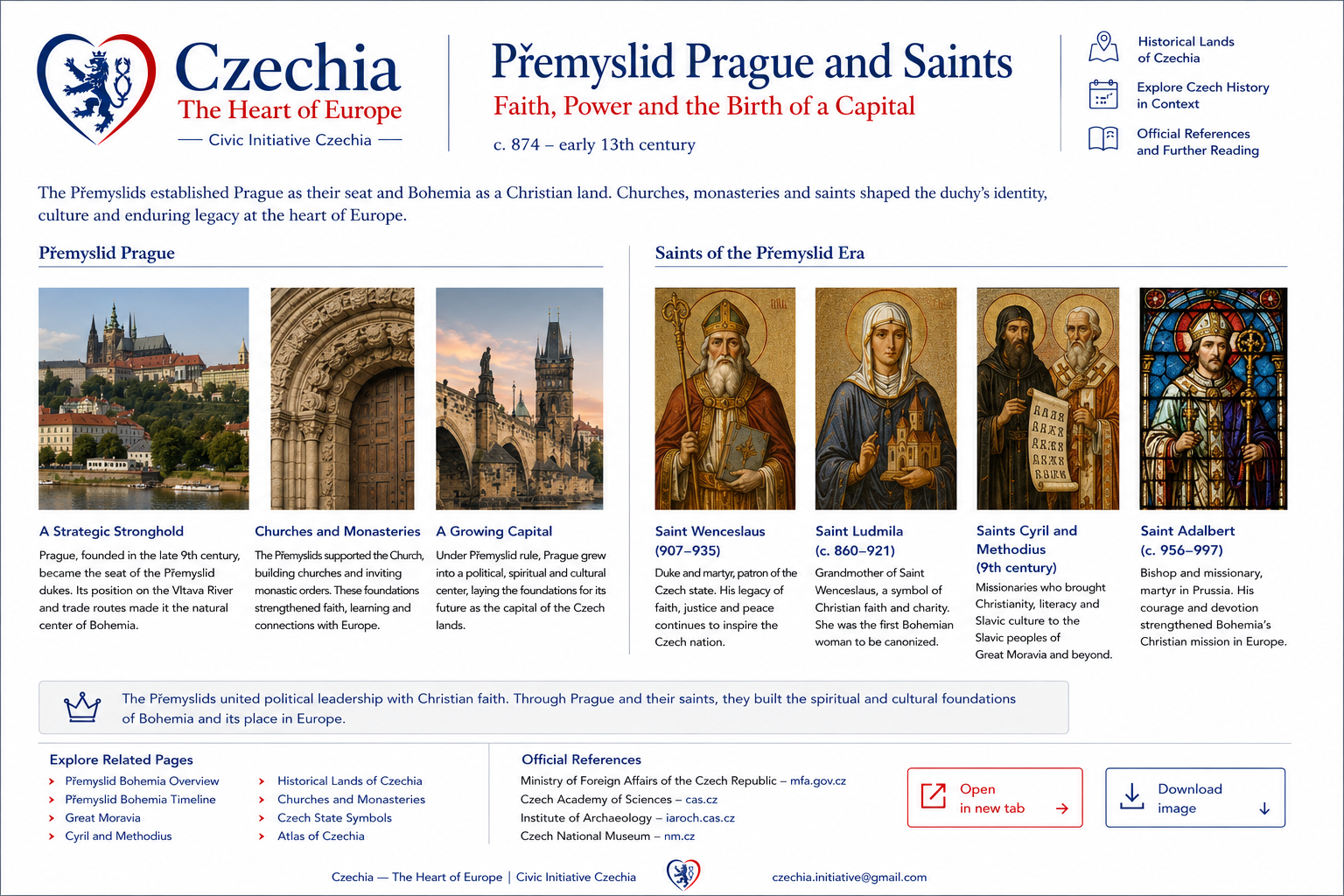
Prague Castle developed as a ruling seat, sacred space and visual centre of Bohemian continuity. Churches, relics, courts, fortifications and elite residence made it the place where power and memory were concentrated.
Saints such as Wenceslas, Ludmila and Adalbert carried political meaning beyond religious devotion. Their stories linked the ruling dynasty with Christian legitimacy, moral authority, missionary horizon and the protection of the land.
What Přemyslid Bohemia contributes to Czech history
Přemyslid Bohemia gives Czech history its first durable medieval state structure. It connects Prague with rulership, Christianity with public authority, Bohemia with European diplomacy, and dynastic memory with later crown identity.
The period also prepares the political and cultural world inherited by the Luxembourg dynasty. By the end of Přemyslid rule, Bohemia had become a kingdom with towns, monasteries, mining wealth, legal privilege, aristocratic power and a wider Central European position.
State continuityThe Přemyslid polity made Bohemia a durable political subject, not only a regional landscape.
Prague’s rolePrague became a centre of rule, sacred memory and later national visibility.
Crown identityRoyal dignity and dynastic continuity prepared the later Bohemian Crown tradition.
European positionBohemia’s rulers acted inside imperial, Polish, Hungarian and wider Central European politics.
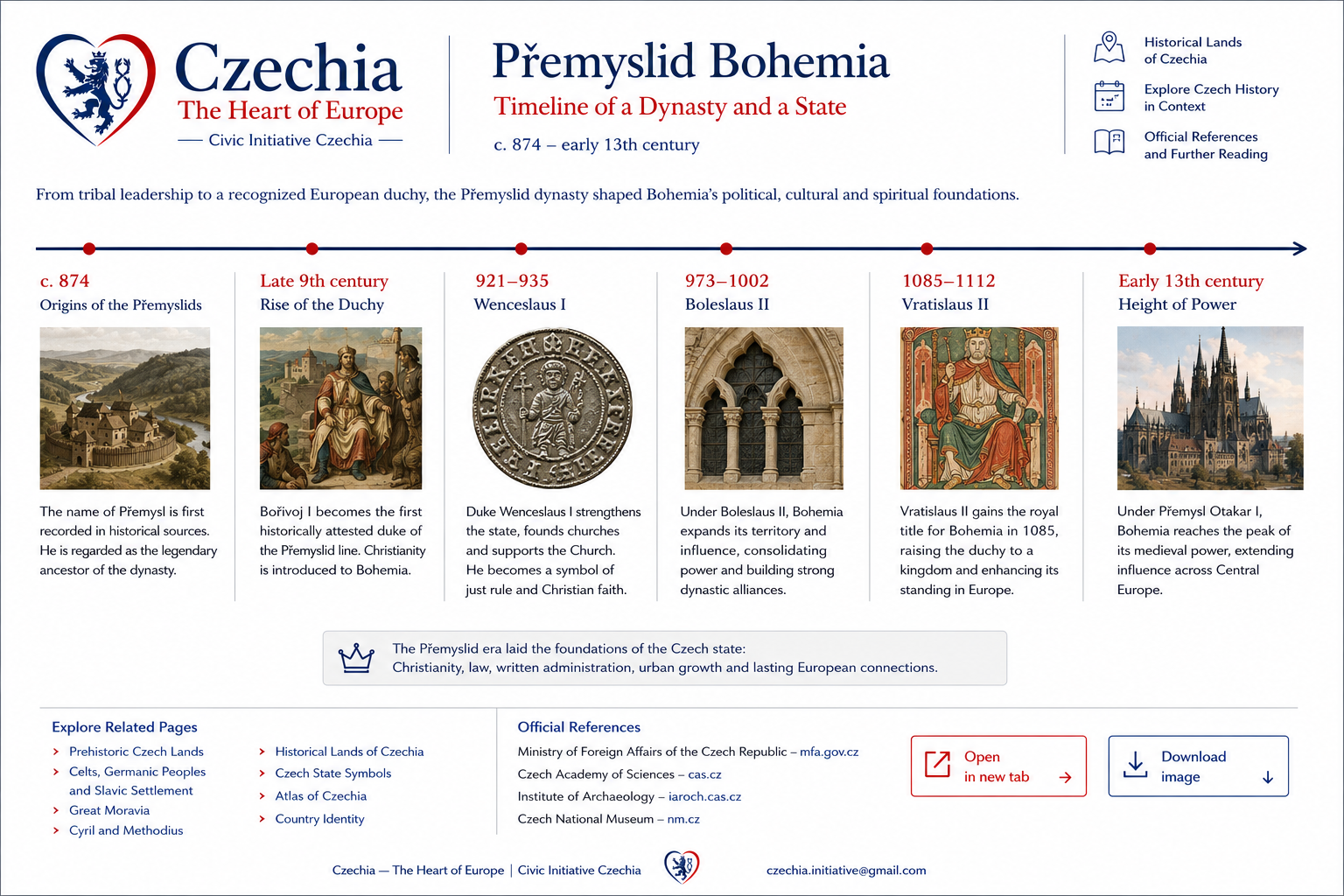
Timeline in one view
Late 800sBohemian rulers emerge in the post-Great Moravian environment, with Prague becoming increasingly important.
c. 935Wenceslas is killed and later venerated as Saint Wenceslas, patron and symbolic protector of the Czech lands.
973The bishopric of Prague is established, strengthening the institutional Christian framework of Bohemia.
1085Vratislaus II receives royal dignity, an important step in the prestige of Bohemian rule.
1212The Golden Bull of Sicily confirms the hereditary royal title for the Bohemian king.
13th centuryTowns, mining, colonisation, law and aristocratic estates transform the kingdom’s economy and society.
1306The Přemyslid male line ends with the murder of Wenceslas III, opening the way to new dynastic politics.
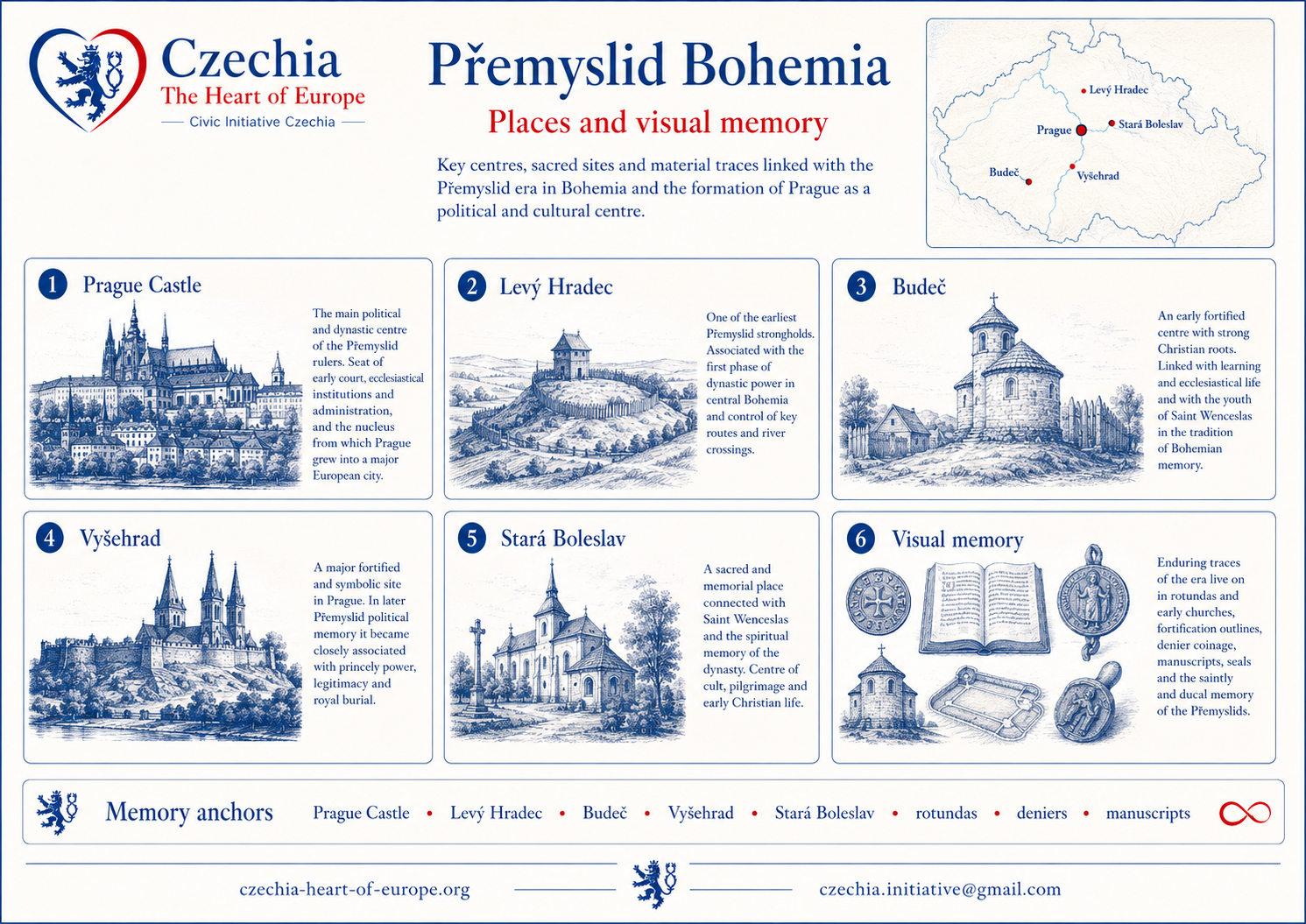
Places and visual memory
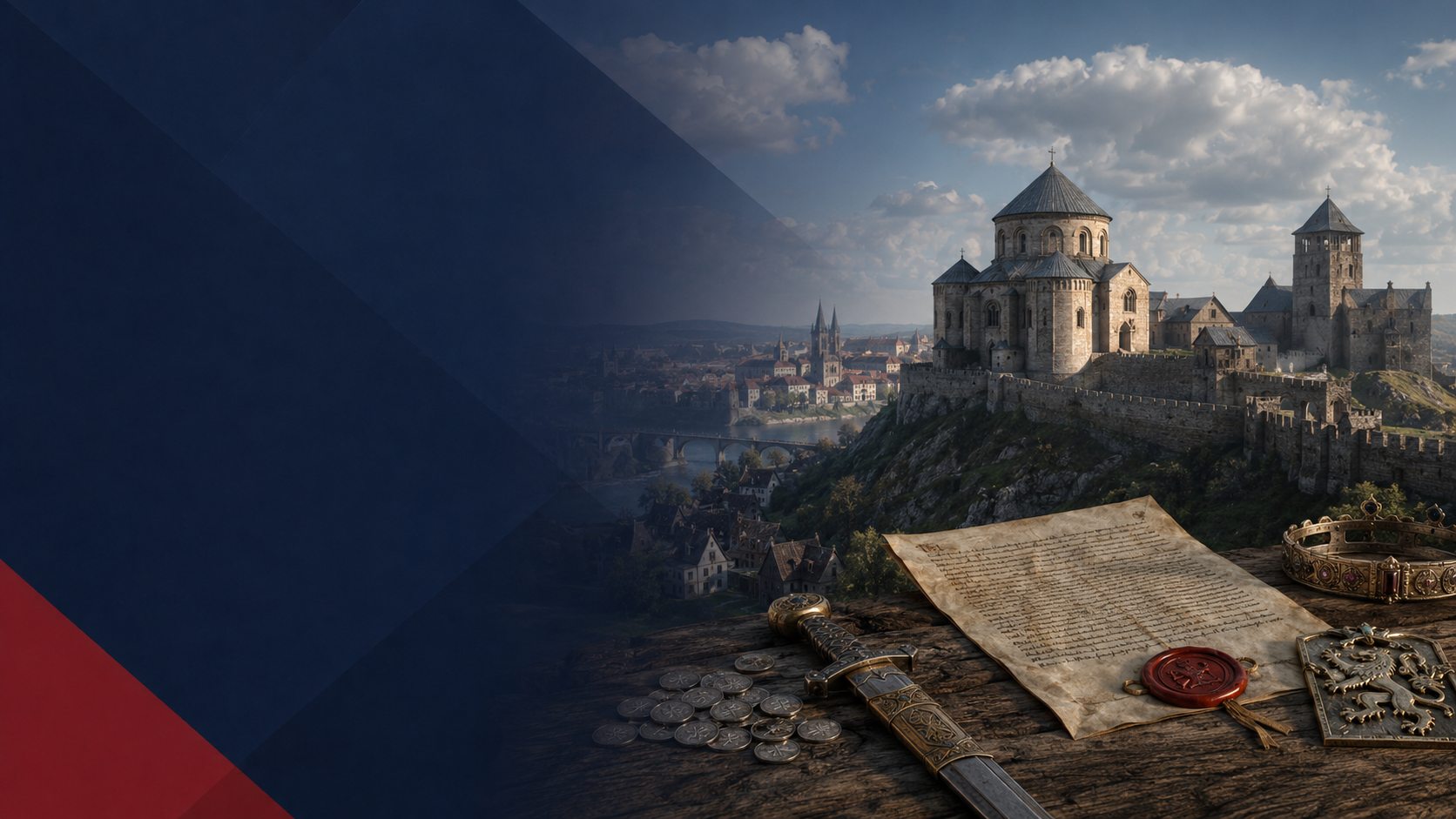
Přemyslid Bohemia is best illustrated through Prague Castle, early churches, rotundas, monasteries, coins, seals, manuscripts, strongholds, royal documents, saintly iconography and maps of medieval Bohemia and Moravia. These visuals should make the period concrete: power centred in Prague, Christian sacred geography, dynastic rule and the formation of a kingdom.