Prehistoric Czech Lands

History · Prehistory

Prehistoric Czech Lands

Before chronicles, crowns and written statehood, the Czech lands were shaped by rivers, uplands, settlements, burial cultures, long-distance exchange, metals and fortified places.

Before written statehood

Territory before the historical record

The prehistoric Czech lands belong to the long archaeological background of Central Europe. Human presence, settlement patterns and material cultures developed across river basins, fertile lowlands, upland margins and mountain approaches. These landscapes connected communities through movement, exchange, craft, burial practice and defensive sites before a written political history of Bohemia, Moravia and Czech Silesia existed.

Prehistory gives the country its deep territorial base. The Elbe, Vltava, Morava and Odra systems, the Bohemian Basin, Moravian corridors and border uplands formed a physical setting where later historical lands could emerge. Archaeology makes this early Czechia visible through tools, ceramics, graves, fortified settlements, metal objects, cult places and traces of daily life.
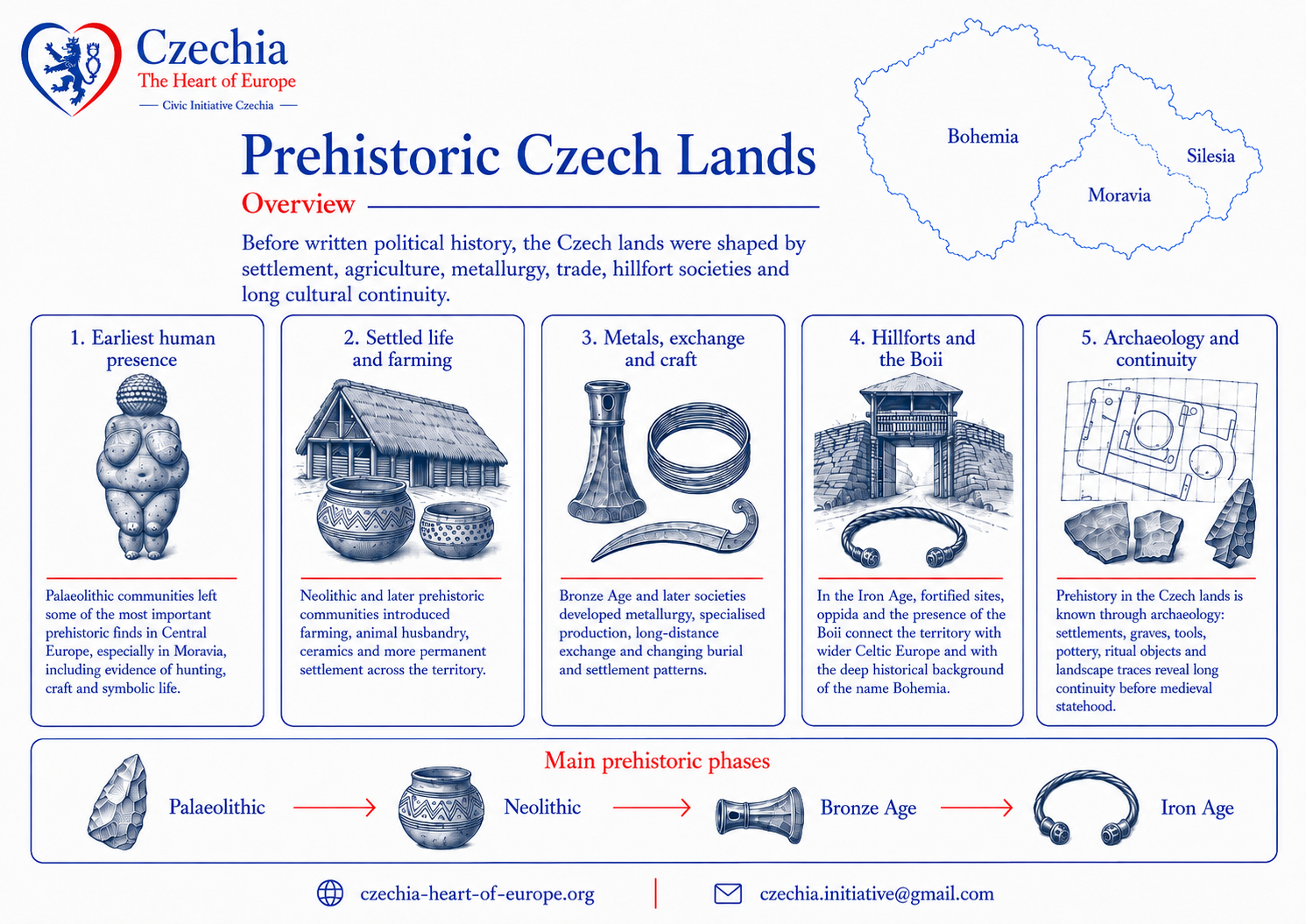
Prehistoric Czech Lands overview information sheet

Fast orientation

Prehistoric reading begins with land use. Communities moved through river valleys, settled fertile zones, used uplands and forests, exchanged raw materials and developed specialised crafts. The record changes over time: stone tools, pottery, burial grounds, bronze objects, iron production, fortified sites and signs of wider European contact.

LandscapeRiver basins, lowlands, uplands and border mountains shaped where people lived, moved and exchanged goods.
Material cultureTools, pottery, graves, ornaments, weapons and metalwork show changing skills, contacts and social structures.
SettlementOpen settlements, burial areas and fortified places reveal how communities occupied and organised the territory.
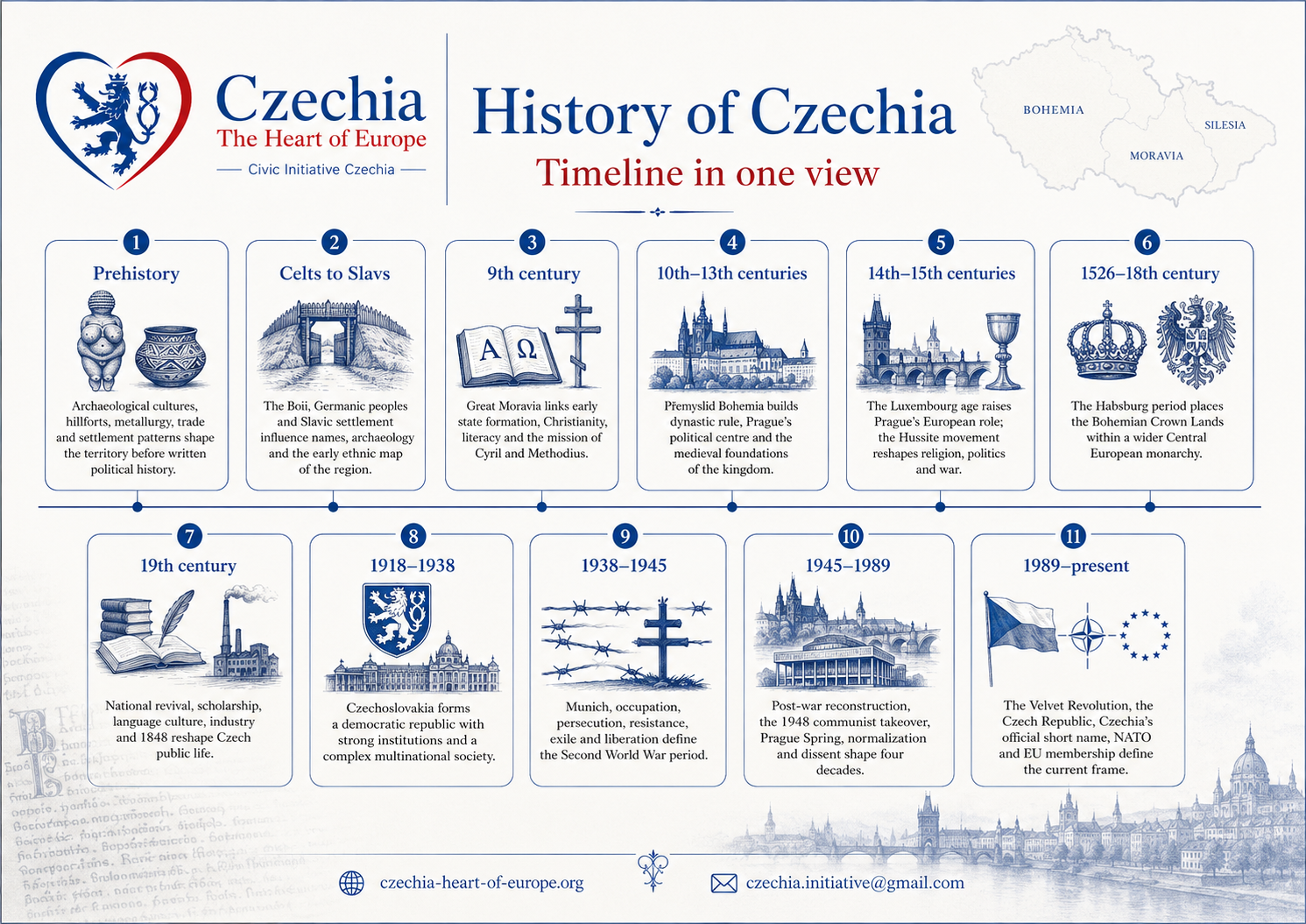
Prehistoric Czech Lands horizontal timeline

Timeline in one view

PalaeolithicHunter-gatherer presence, stone tools and Ice Age environments show the earliest human activity in the wider Czech lands.
NeolithicFarming communities, pottery, permanent settlements and cultivated landscapes transform daily life and land use.
EneolithicCopper use, social differentiation, burial practices and long-distance contacts prepare the transition toward metal-age societies.
Bronze AgeBronze metallurgy, hoards, fortified sites, exchange networks and changing burial cultures connect the territory to wider Central Europe.
Iron AgeHallstatt and La Tène horizons bring ironworking, elite centres, craft specialisation and Celtic presence into clearer view.
Late prehistoryContacts among Celtic, Germanic and later Slavic layers prepare the early historical landscape of Bohemia and Moravia.

What prehistory explains

Land before names

The names Bohemia, Moravia and Czechia belong to later historical language, but the territory had already been organised by geography and human use. Fertile basins, river crossings, resource zones and upland boundaries gave the future Czech lands a recognisable spatial logic.

Rivers and basinsThe Vltava, Elbe, Morava and Odra systems structured movement, settlement and contact.
ResourcesStone, clay, metal ores, forest products and agricultural land supported craft and exchange.

From settlement to society

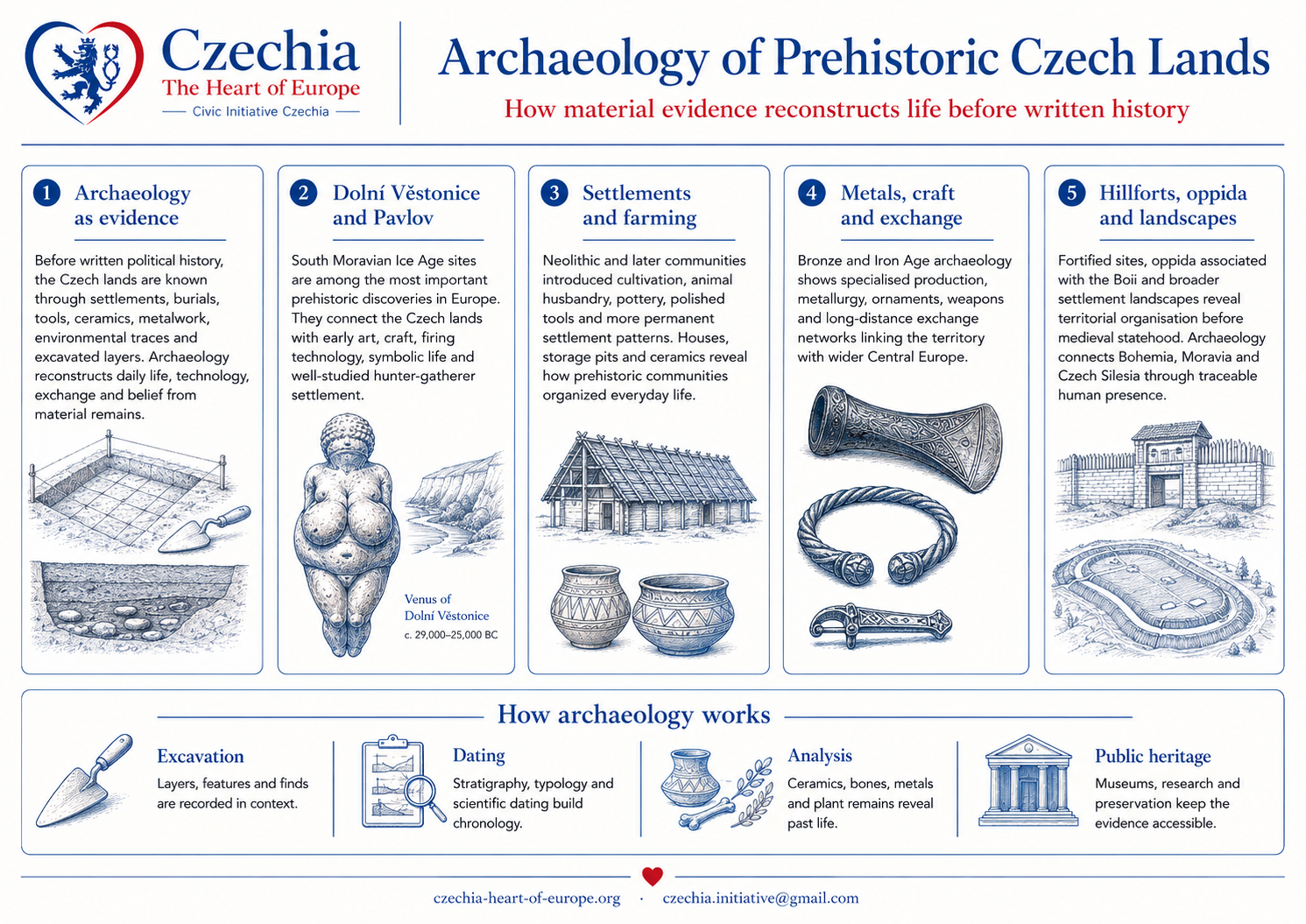
Archaeological cultures are read through repeated evidence: house plans, ceramics, tools, graves, storage pits, defensive works and traces of production. Changes in burial practice, settlement density and imported objects show that prehistoric communities were connected to broader European developments while remaining strongly shaped by local geography.

Daily lifeFarming, herding, hunting, craft, storage and household production shaped ordinary settlement life.
ExchangeRaw materials, ornaments, metals and techniques moved across regions and linked the Czech lands with neighbouring areas.
Belief and burialGraves, ritual deposits and symbolic objects preserve traces of social order and spiritual imagination.
Defence and powerFortified sites and elevated settlements show organisation, protection and control over surrounding landscapes.
Prehistoric Czech Lands archaeology information sheet

Why this period matters for Czechia

Prehistory anchors Czech history in land, evidence and continuity. It places the later Czech state within a much older Central European human landscape, where movement, settlement, exchange and cultural change preceded the first medieval political centres. The later historical lands did not appear on empty ground; they developed over a territory already marked by deep human presence.