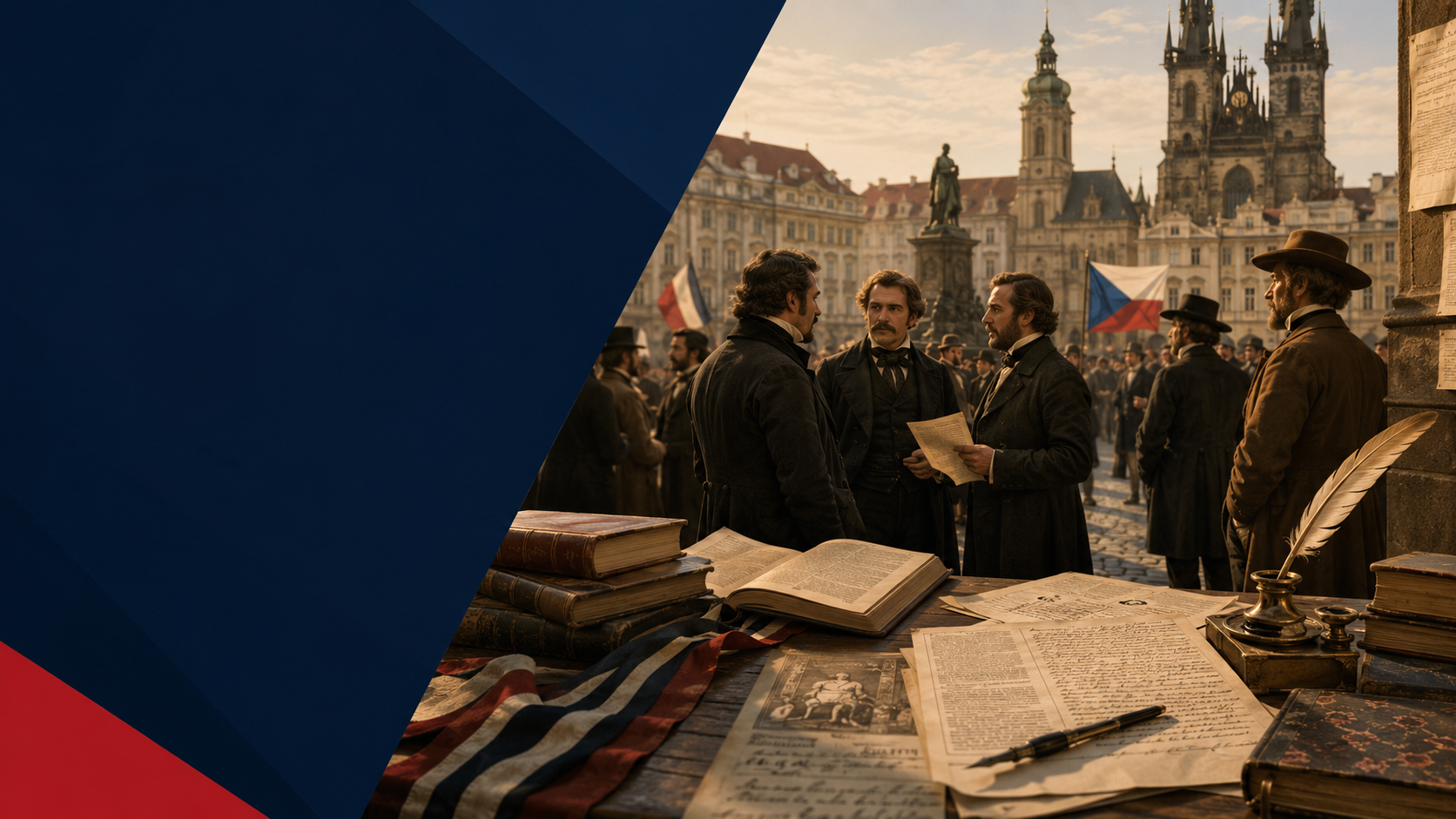
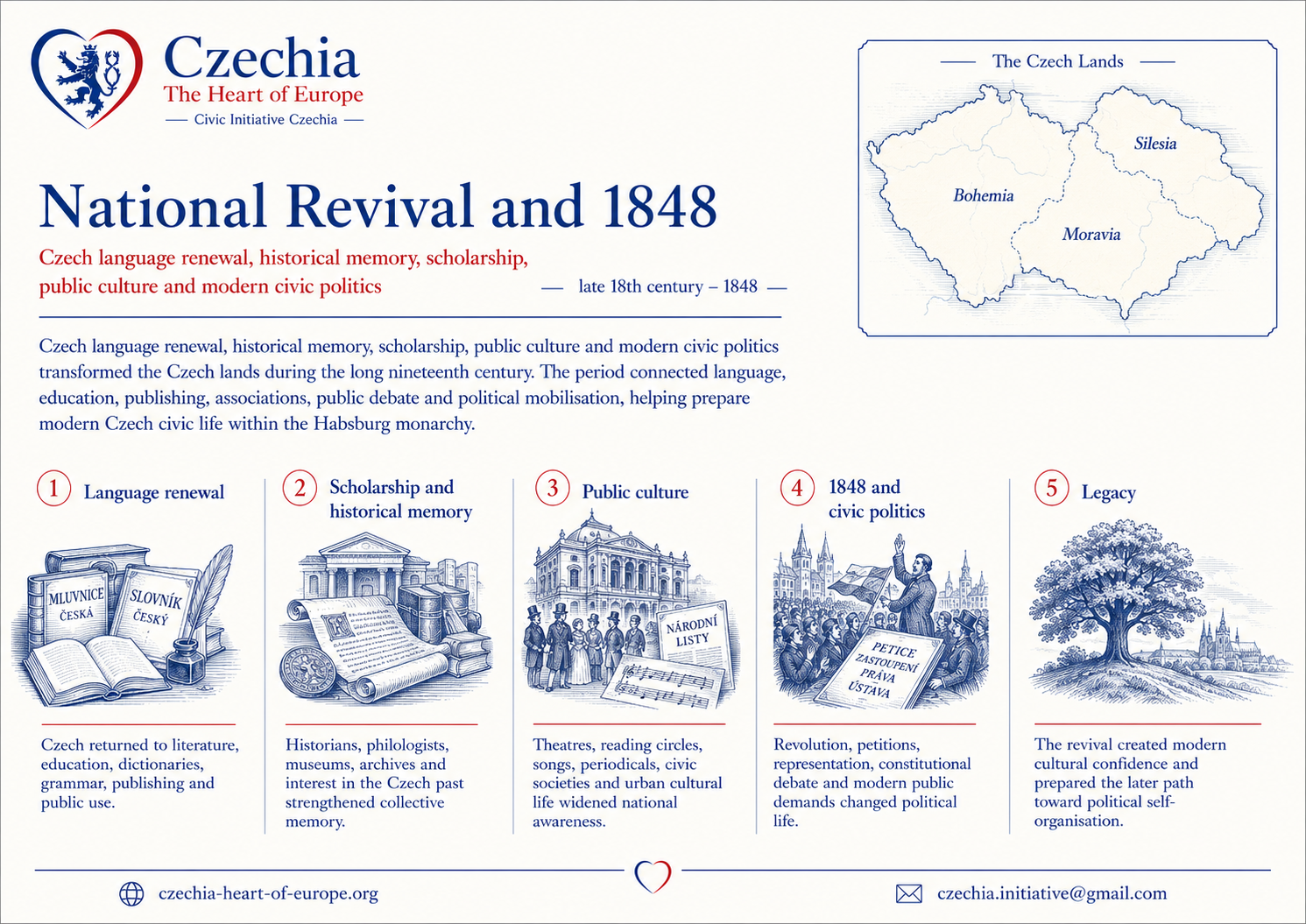
Czech language renewal, historical memory, scholarship, public culture and modern civic politics transformed the Czech lands during the long nineteenth century.
The National Revival turned language, scholarship, publishing, theatre, museums and civic association into instruments of public renewal. In the Czech lands, history was gathered, edited, performed, taught and debated. Czech became a modern language of literature, science, journalism, administration, public meetings and political argument.
The period connected cultural work with social change. Schools, libraries, learned societies, newspapers, industry, urban life and voluntary associations helped create a modern Czech public. By 1848, the question of language had become a question of representation, rights, constitutional order and political participation inside the Habsburg monarchy.
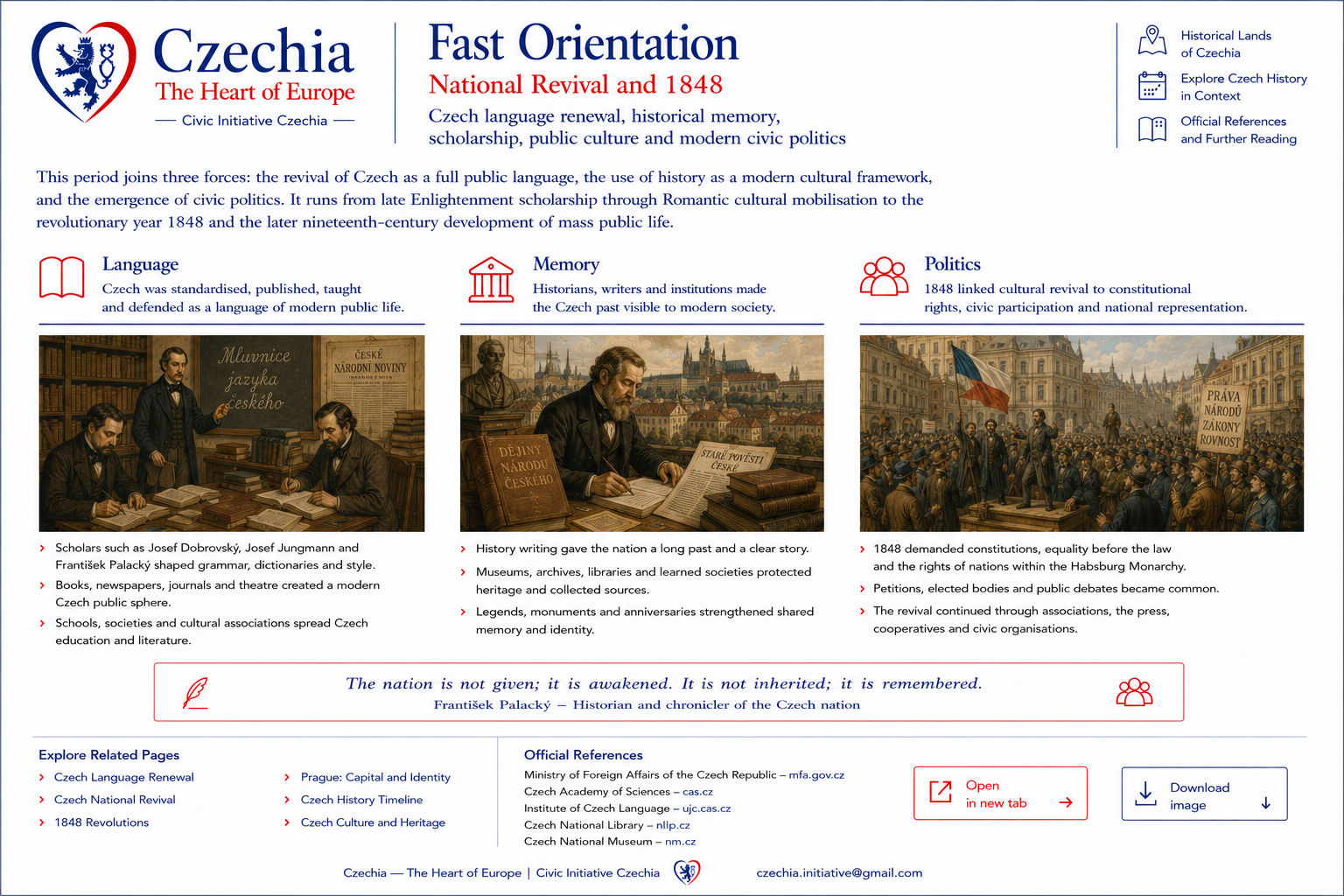
This period joins three forces: the revival of Czech as a full public language, the use of history as a modern cultural framework, and the emergence of civic politics. It runs from late Enlightenment scholarship through Romantic cultural mobilisation to the revolutionary year 1848 and the later nineteenth-century development of mass public life.
LanguageCzech was standardised, published, taught and defended as a language of modern public life.
MemoryHistorians, writers and institutions made the Czech past visible to modern society.
Politics1848 linked cultural revival to constitutional rights, civic participation and national representation.
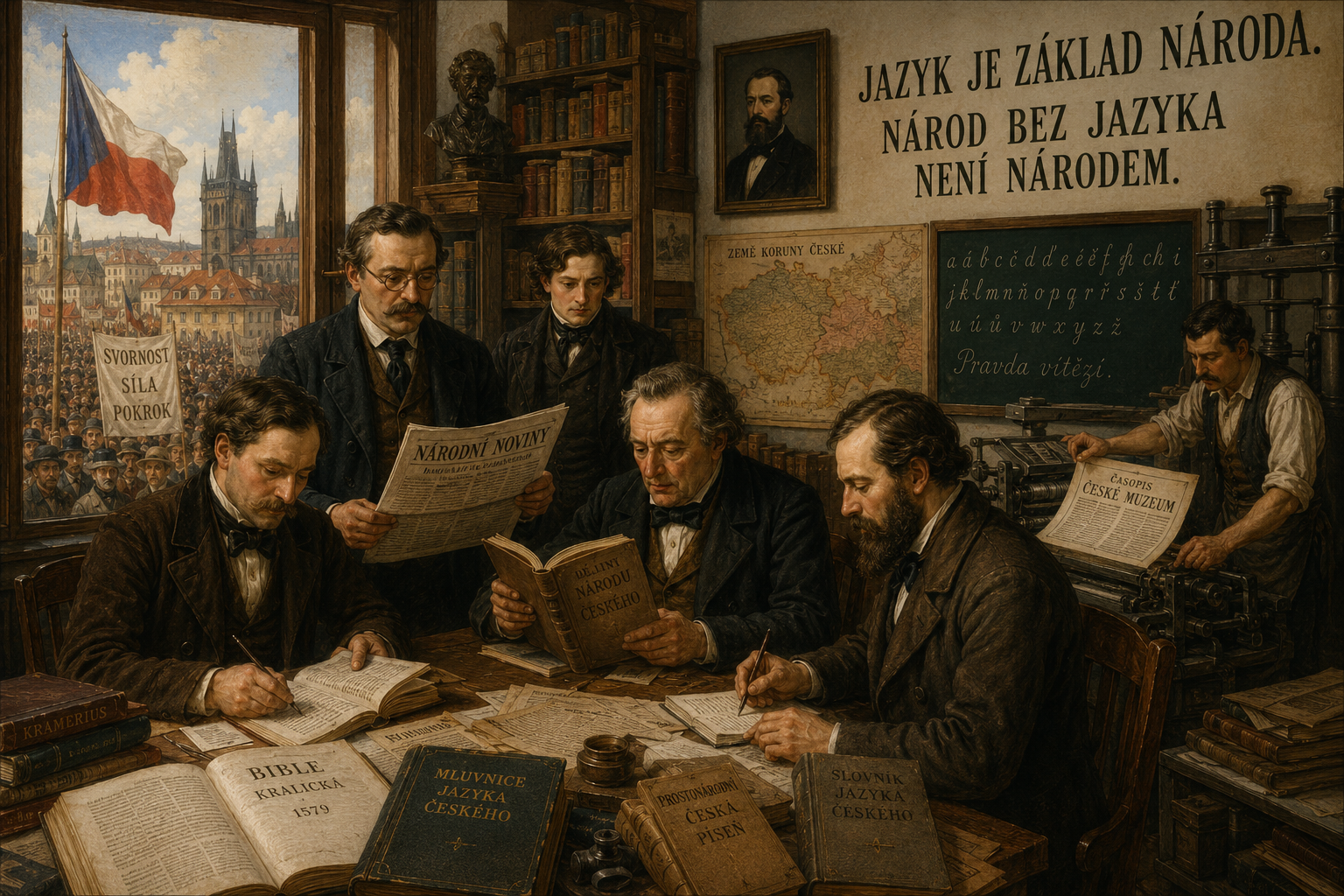
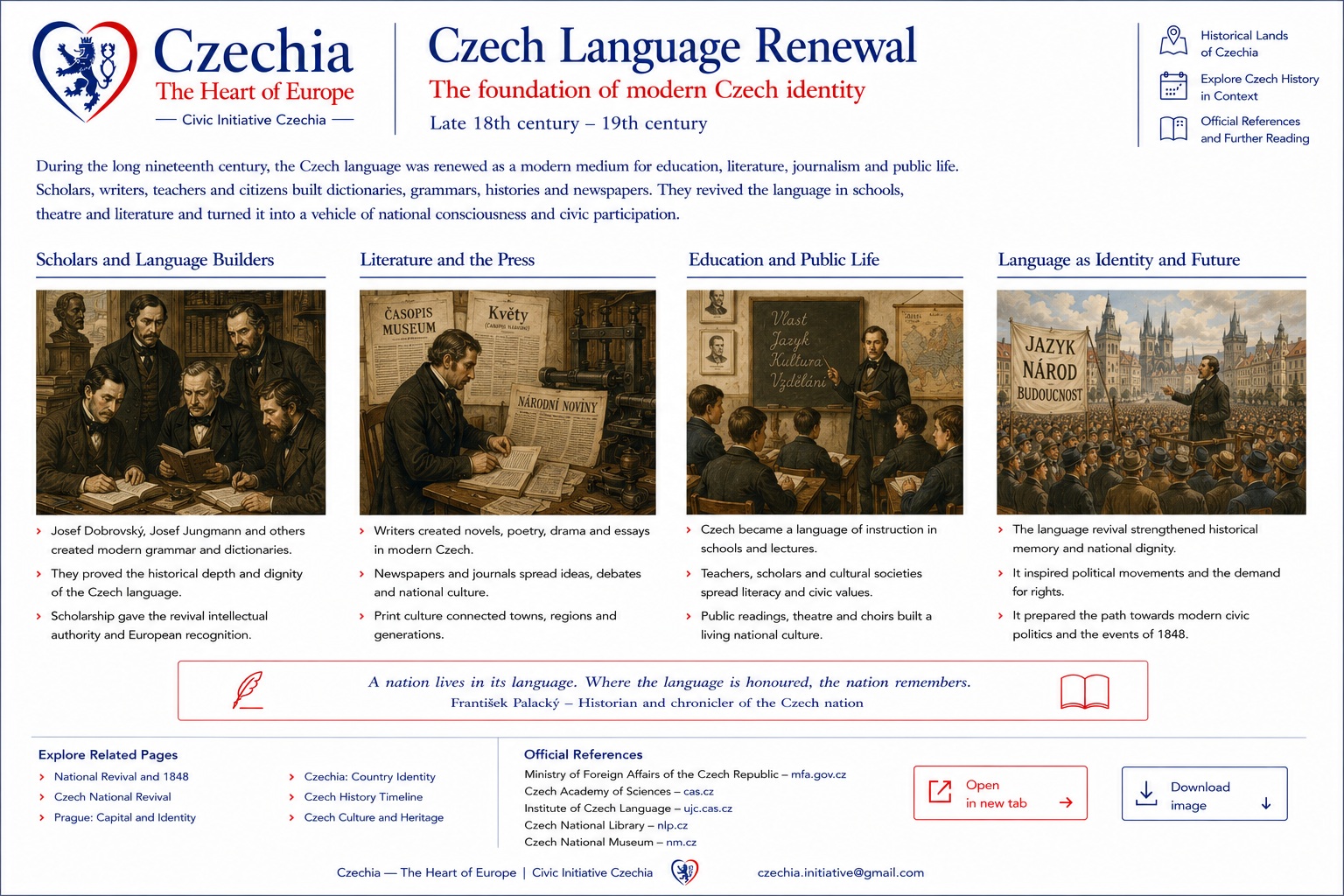
The revival of Czech depended on grammar, dictionaries, editions, translation, journalism and education. Scholars and writers worked to make Czech precise enough for literature, science, history, theatre and public debate. The language was not treated only as heritage; it was built as a modern tool for society.
Figures such as Josef Dobrovský and Josef Jungmann became central to this work. Their scholarship supported a broader transformation in which newspapers, books, schools and cultural societies widened the reach of Czech-language public communication.
Grammar and scholarshipPhilology, language study and codification gave Czech a modern learned foundation.
Dictionaries and translationVocabulary work expanded Czech for literature, science, public debate and civic life.
PublishingBooks, newspapers and journals carried Czech into a growing reading public.
EducationSchools and cultural institutions helped move Czech from private and local use into public authority.
Museums, archives, editions and national narrative
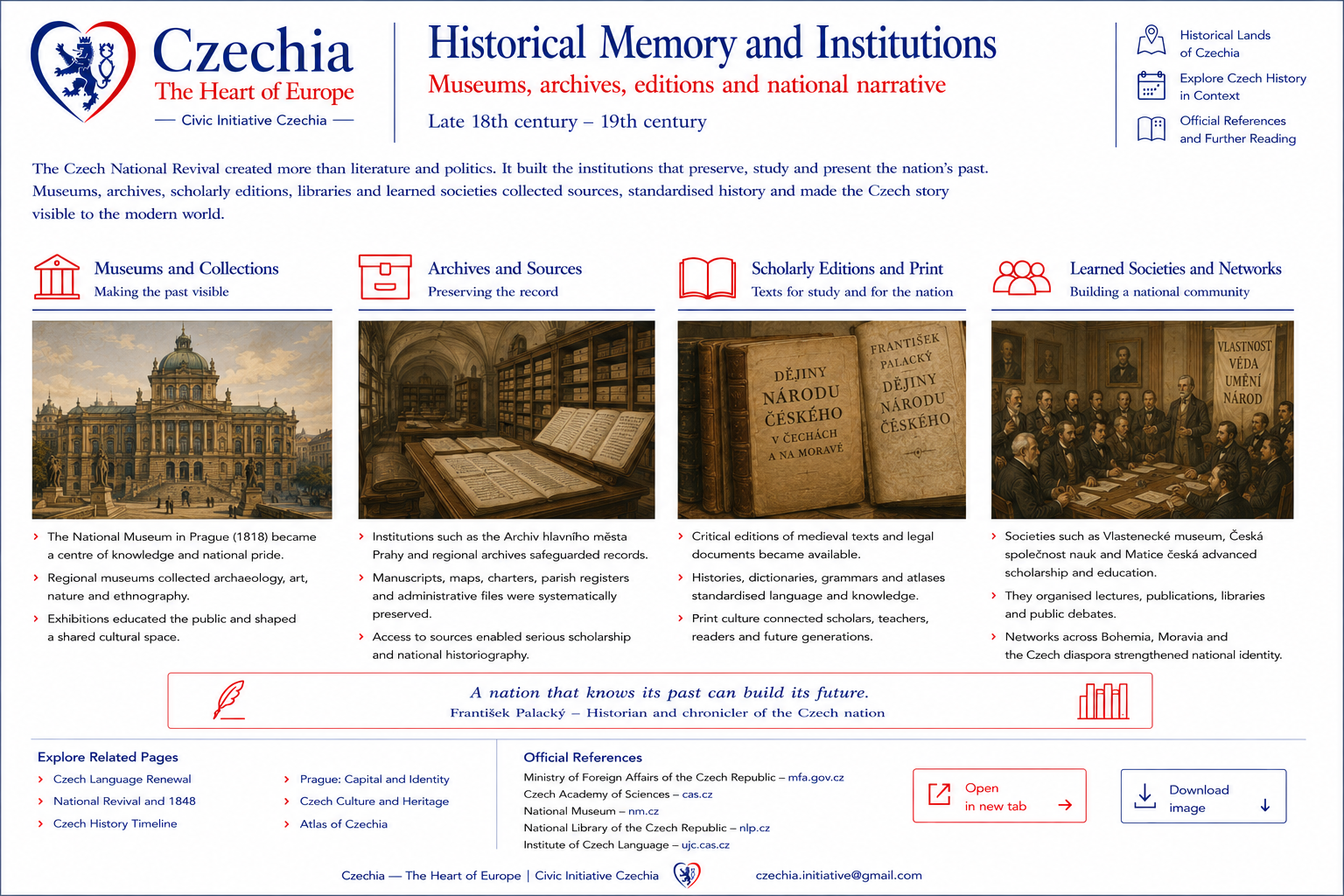
The nineteenth century made history a public resource. Manuscripts, chronicles, monuments, maps, folklore, medieval memory and the story of the Czech lands were collected and interpreted for a modern audience. The past became a shared field in which the country could recognise itself.
The National Museum, learned societies, libraries, archives and scholarly editions played a crucial role. František Palacký gave Czech history a powerful modern narrative, especially through his interpretation of the Czech lands in relation to Europe, reform, statehood and public responsibility.
National MuseumCollections, research and public display helped organise historical and natural knowledge.
PalackýModern historiography placed Czech history inside a broader European argument.
Folklore and memorySongs, legends, regional culture and historical places entered modern public identity.
Archives and editionsDocuments and sources gave historical claims scholarly weight.
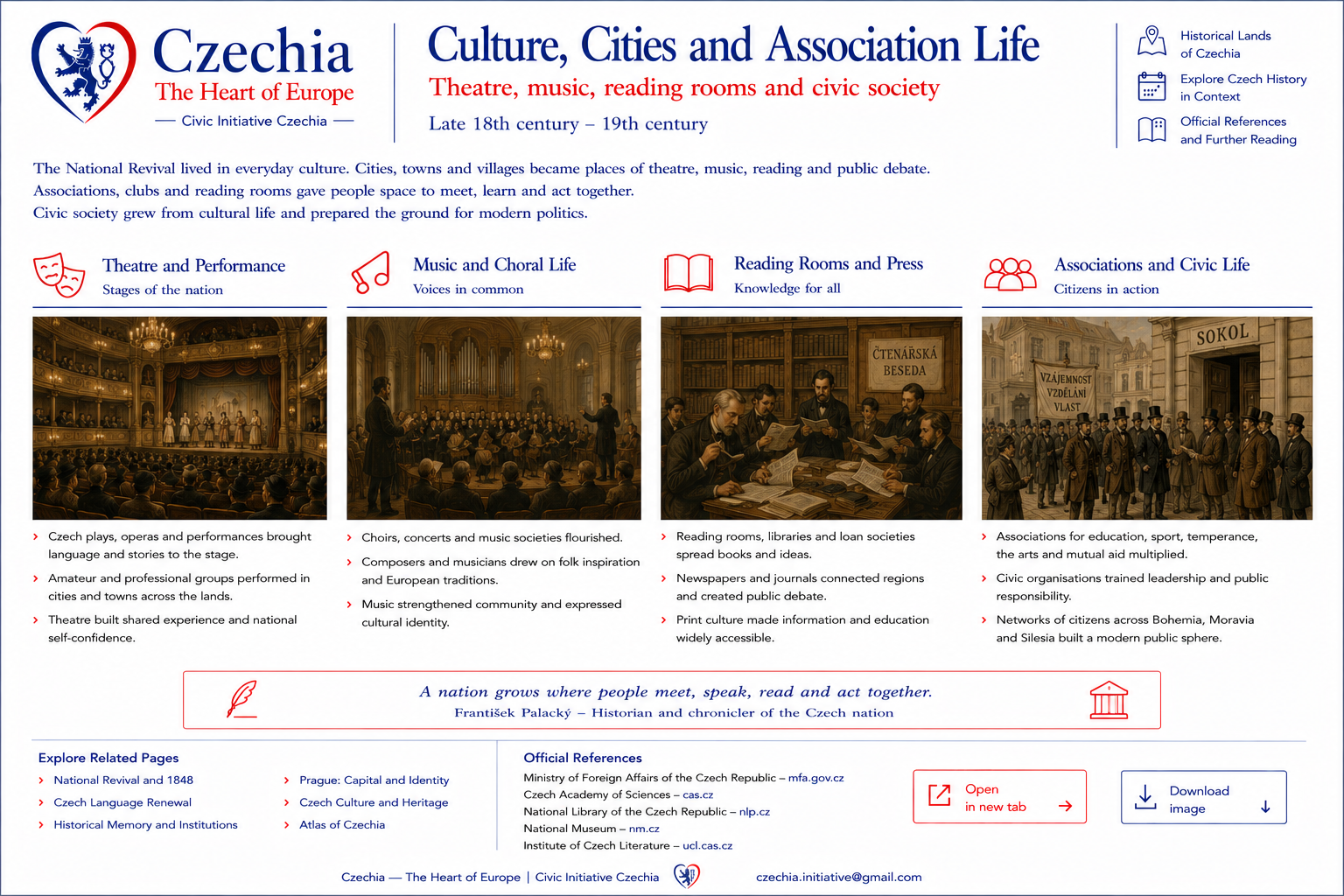
Public culture carried revival beyond scholarship. Theatre, music, journalism, balls, reading rooms, clubs, patriotic events and regional societies turned national culture into everyday practice. Prague was central, but the revival also grew through towns across Bohemia and Moravia.
Theatre gave language a public voice. Music, poetry, historical painting, architecture and commemorative events gave the movement emotional and visual form. Voluntary associations created practical networks for education, culture, charity, sport, publishing and political discussion.
TheatreStages made Czech speech visible, public and emotionally persuasive.
JournalismNewspapers connected readers to politics, culture, economy and public debate.
AssociationsClubs, societies and reading rooms built civic habits and social networks.
Urban lifeGrowing towns linked industry, education, printing, politics and public culture.
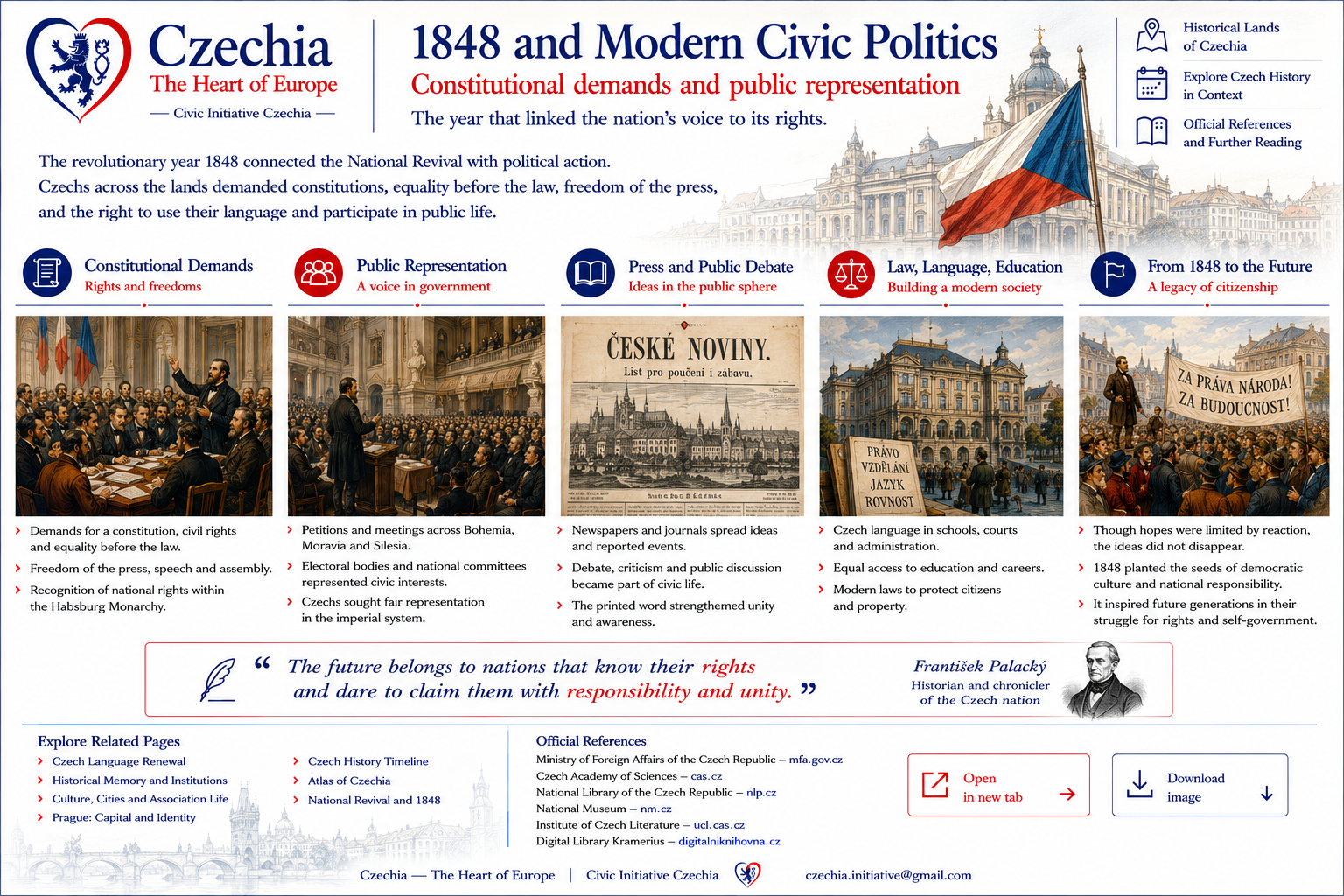
The revolutionary year 1848 brought cultural renewal into open politics. In the Czech lands, demands for constitutional rights, language equality, representation, civil freedoms and the recognition of the Bohemian Crown lands became part of a wider European revolutionary moment.
The Slavic Congress in Prague, the public role of Palacký, political petitions, newspapers, municipal activism and debates over the Habsburg monarchy turned historical identity into a civic programme. The year 1848 did not settle the national question, but it changed the scale of public participation and made modern political language unavoidable.
Constitutional orderRights, representation and lawful public participation became central political demands.
Language equalityCzech public life pressed for recognition in administration, education and political institutions.
Slavic CongressPrague became a meeting point for debates on Slavic cooperation inside Europe.
Public mobilisationPetitions, newspapers and assemblies widened the political public.
National Revival and 1848 explain how Czech modern identity became a public practice. The movement transformed language into a civic instrument, history into a shared framework, culture into social organisation and politics into a programme of rights and representation.
The period prepared the later mass politics of the nineteenth century and the democratic statehood of 1918. It also explains why Czech public life gives such importance to language, education, archives, theatre, civic association, historical memory and the responsible use of names.
Modern languageCzech became a full public language for literature, science, journalism and politics.
Historical frameworkThe Czech lands were interpreted as a continuous public story.
Civic networksAssociations, publishing and cultural institutions built habits of participation.
Political vocabulary1848 connected culture with rights, constitutional order and representation.
Timeline in one view
1770s–1780sEnlightenment reforms expand schooling, administration and public literacy inside the Habsburg monarchy.
1790sScholarly interest in Czech language, history and older literature strengthens the early revival environment.
1818The institution later known as the National Museum is founded in Prague.
1820s–1830sDictionaries, histories, journals, theatre and cultural societies broaden Czech-language public life.
1834The song later known as the Czech anthem, “Kde domov můj”, is first performed in Prague.
1830s–1840sIndustrial growth, urban reading publics and political journalism expand modern civic society.
1848Revolutionary politics bring constitutional demands, public assemblies and national representation into open debate.
June 1848The Slavic Congress meets in Prague during a wider European revolutionary year.
After 1848The revival continues through education, associations, journalism, municipal politics and later mass national movements.
Places and visual memory
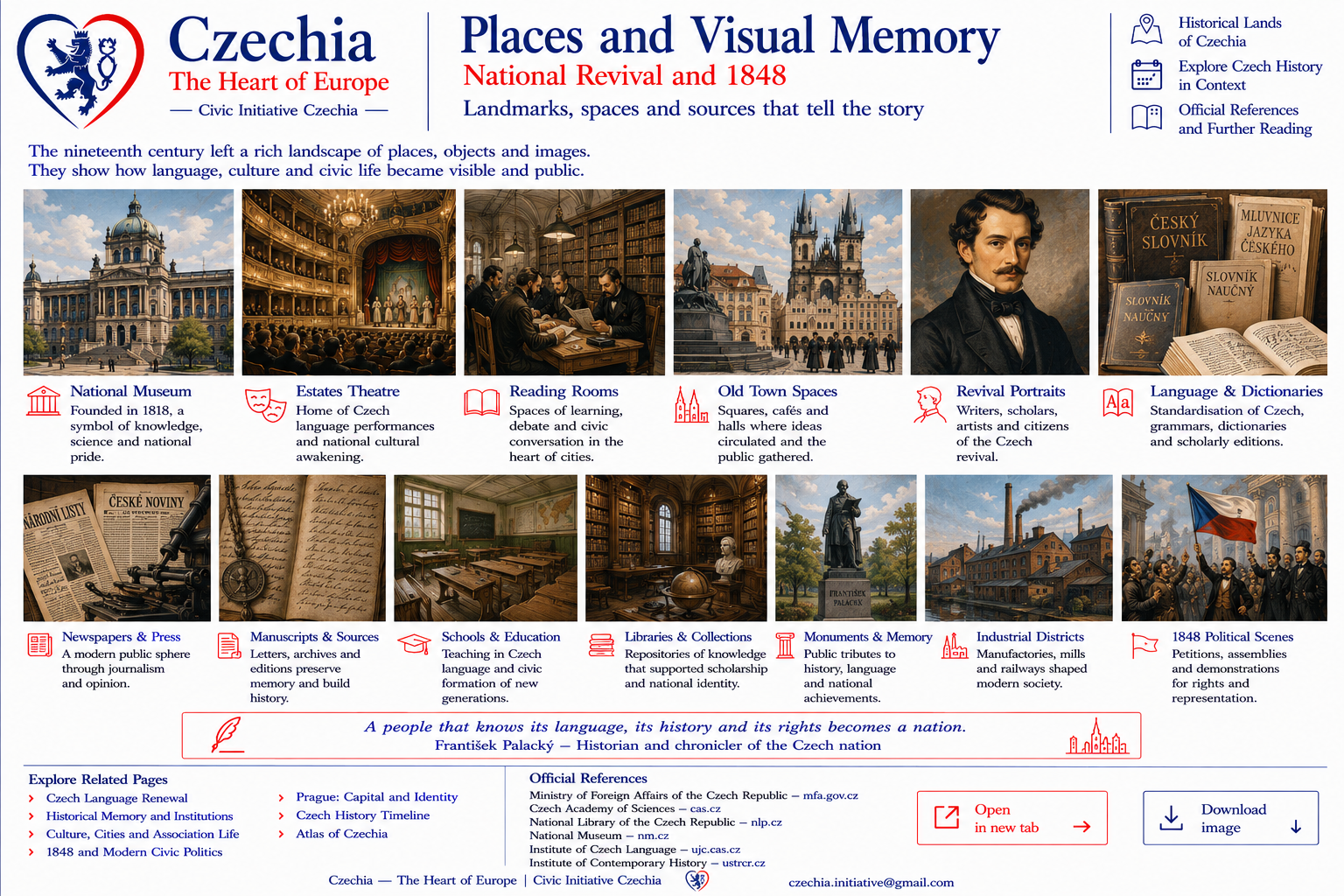
This period is best shown through the National Museum, the Estates Theatre, Prague reading rooms and publishing houses, Old Town public spaces, revival-era portraits, language dictionaries, newspapers, historic manuscripts, school interiors, libraries, monuments, regional towns, industrial districts and 1848 political scenes.