Czechia’s natural heritage is protected through national parks, protected landscape areas, reserves, Natura 2000 sites and local conservation zones. This page helps visitors understand where nature protection matters, how access works, and how to enjoy forests, rivers, rocks, meadows, wetlands and mountains responsibly.
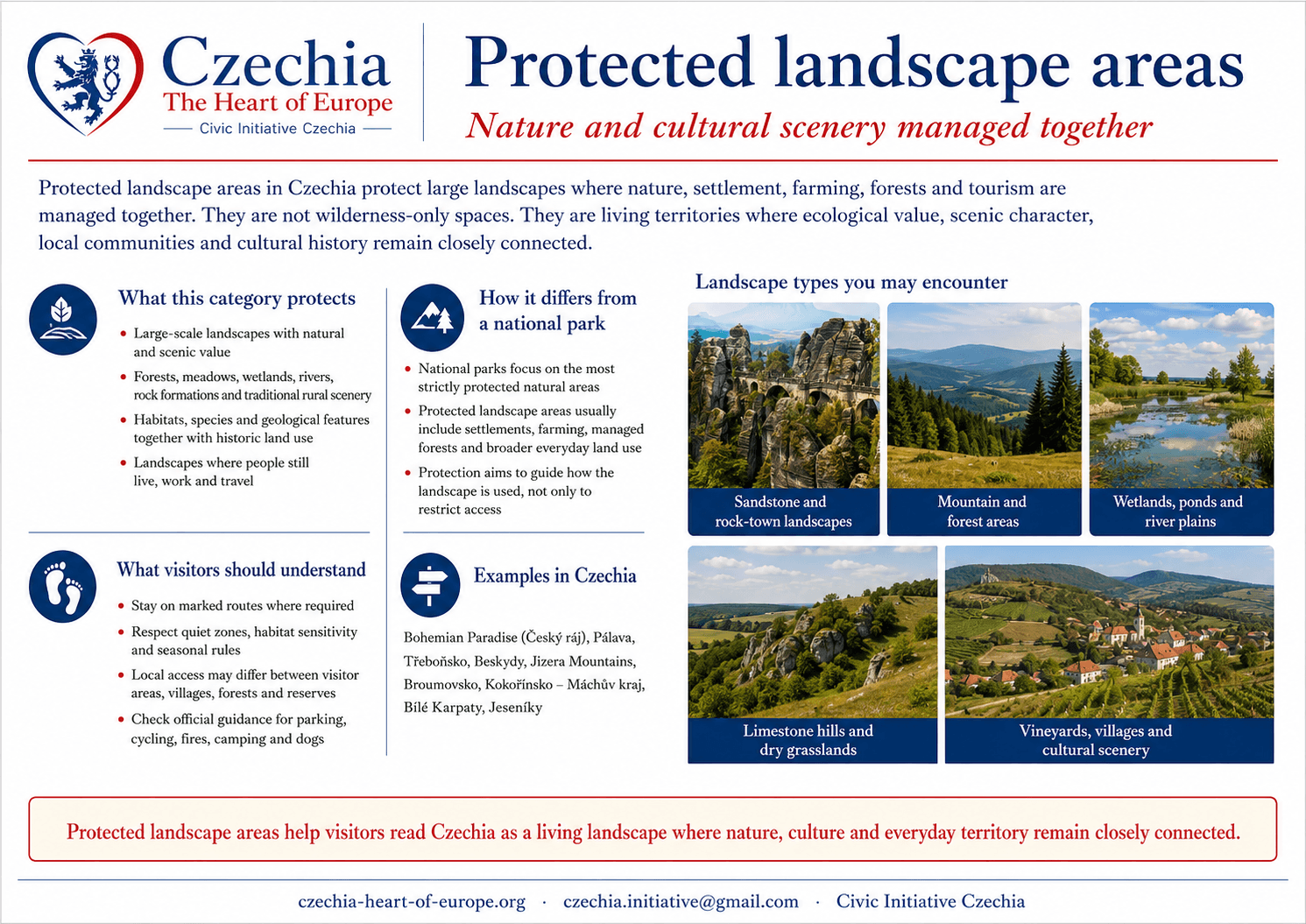
Protected landscapeslarge scenic and cultural areas
Reservesspecific habitats and formations
Visitor rulesaccess, safety, conservation
Overview
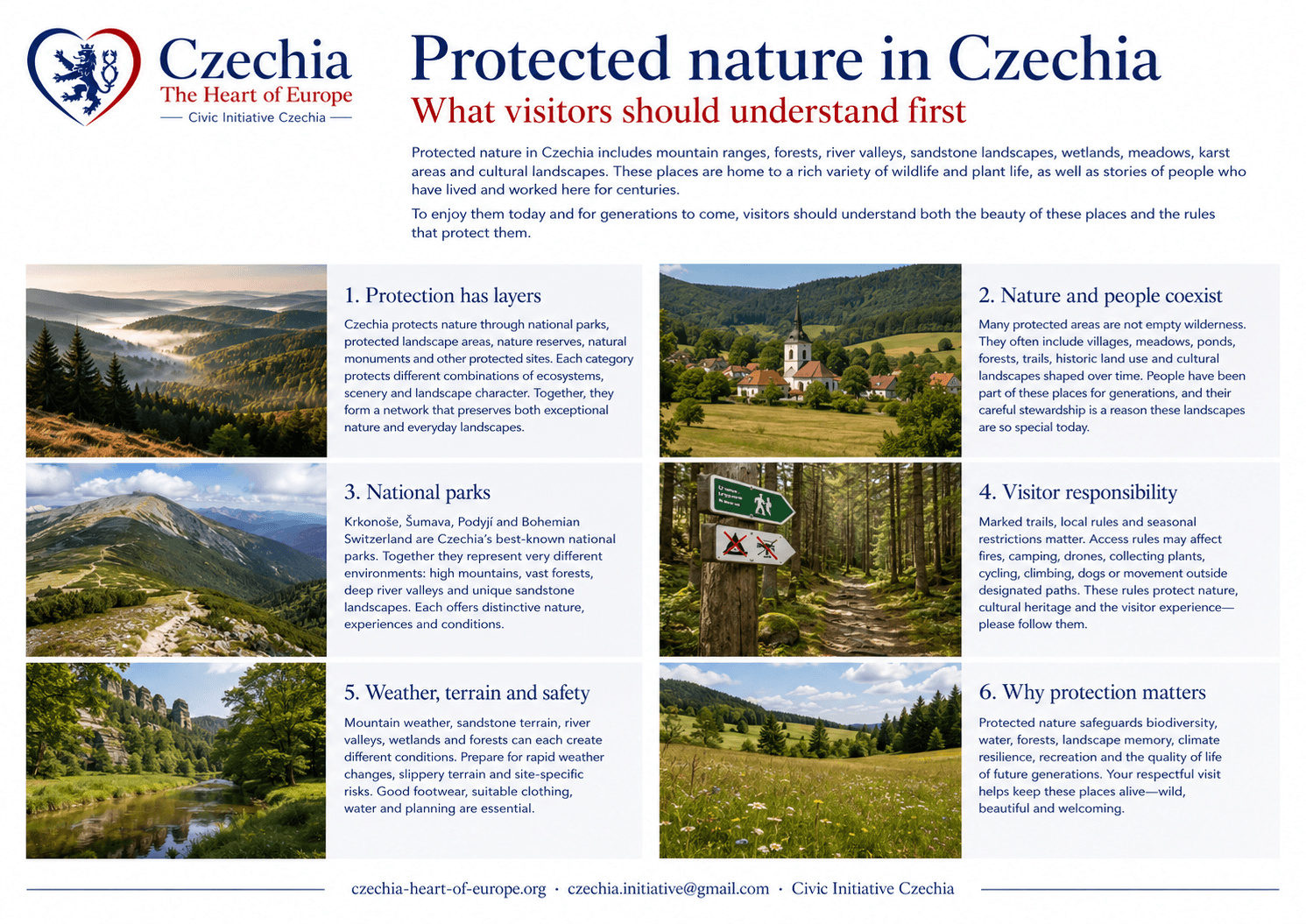
Protected nature in Czechia: what visitors should understand first.
Czechia’s protected natural areas are not only scenic destinations. They are managed spaces where biodiversity, geology, forests, rivers, wetlands, meadows, rock formations and traditional land use are protected while public access remains possible under clear rules.
The most important distinction is between landscape as structure and protected nature as managed heritage. The Landscapes page explains how Czechia is physically organized. This page explains how natural areas are protected, visited and respected: national parks, protected landscape areas, nature reserves, seasonal limits, marked trails, visitor centres and local conservation rules.
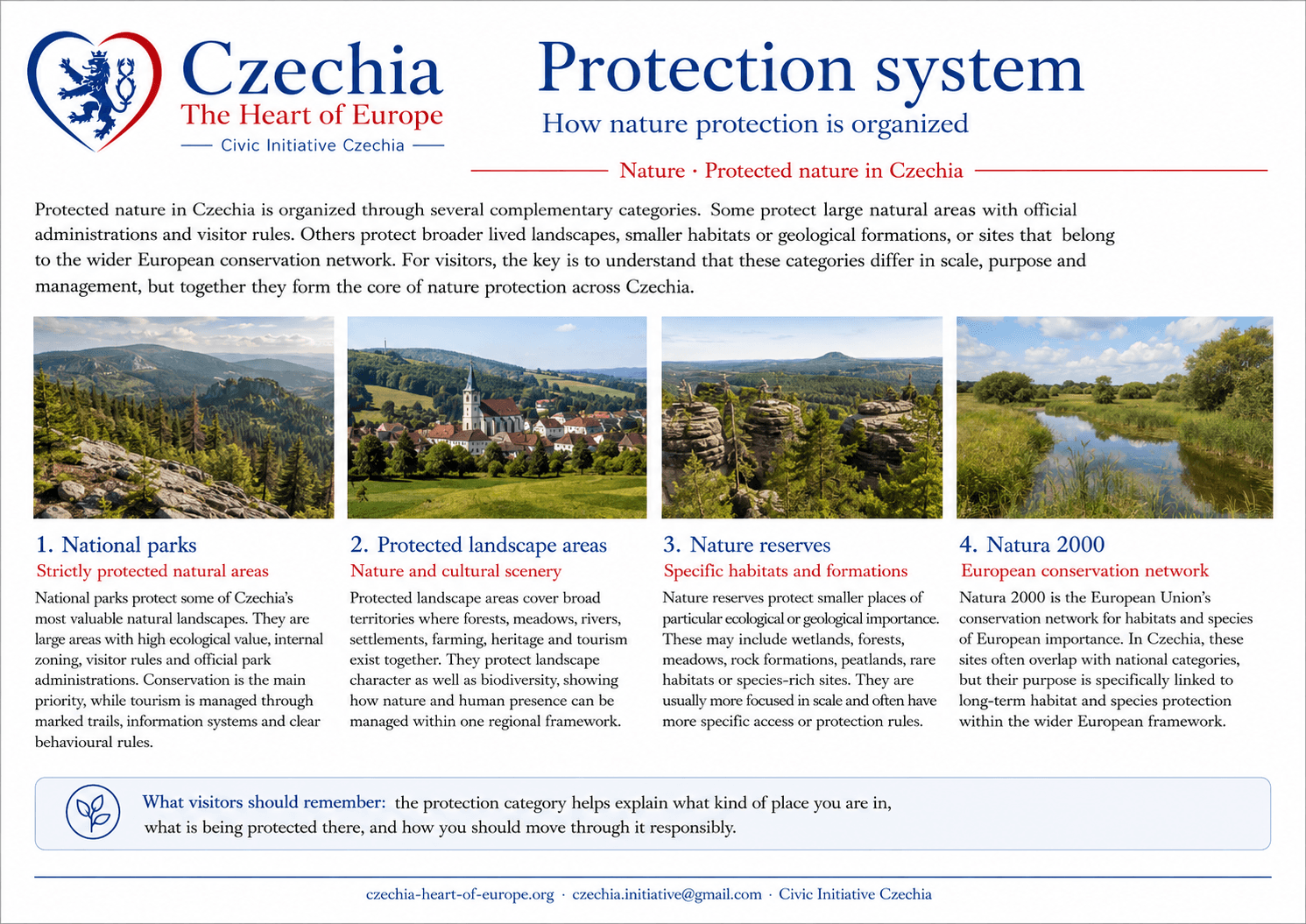
Visitors will most often encounter four kinds of protected natural places: national parks, protected landscape areas, nature reserves and smaller protected sites. Each category has a different purpose and different access conditions. Always check local signs, visitor-centre information and official pages before entering sensitive areas.
National parks
Strictly protected natural areasLarge areas with high ecological value, zoning, visitor rules and official park administrations.
Protected landscape areas
Nature and cultural sceneryLarge landscapes where nature protection, settlements, farming, forests and tourism are managed together.
Nature reserves
Specific habitats and formationsSmaller protected places for rare ecosystems, geological sites, wetlands, forests, meadows or species.
Natura 2000
European conservation networkSites protected for habitats and species of European importance, sometimes overlapping with national categories.
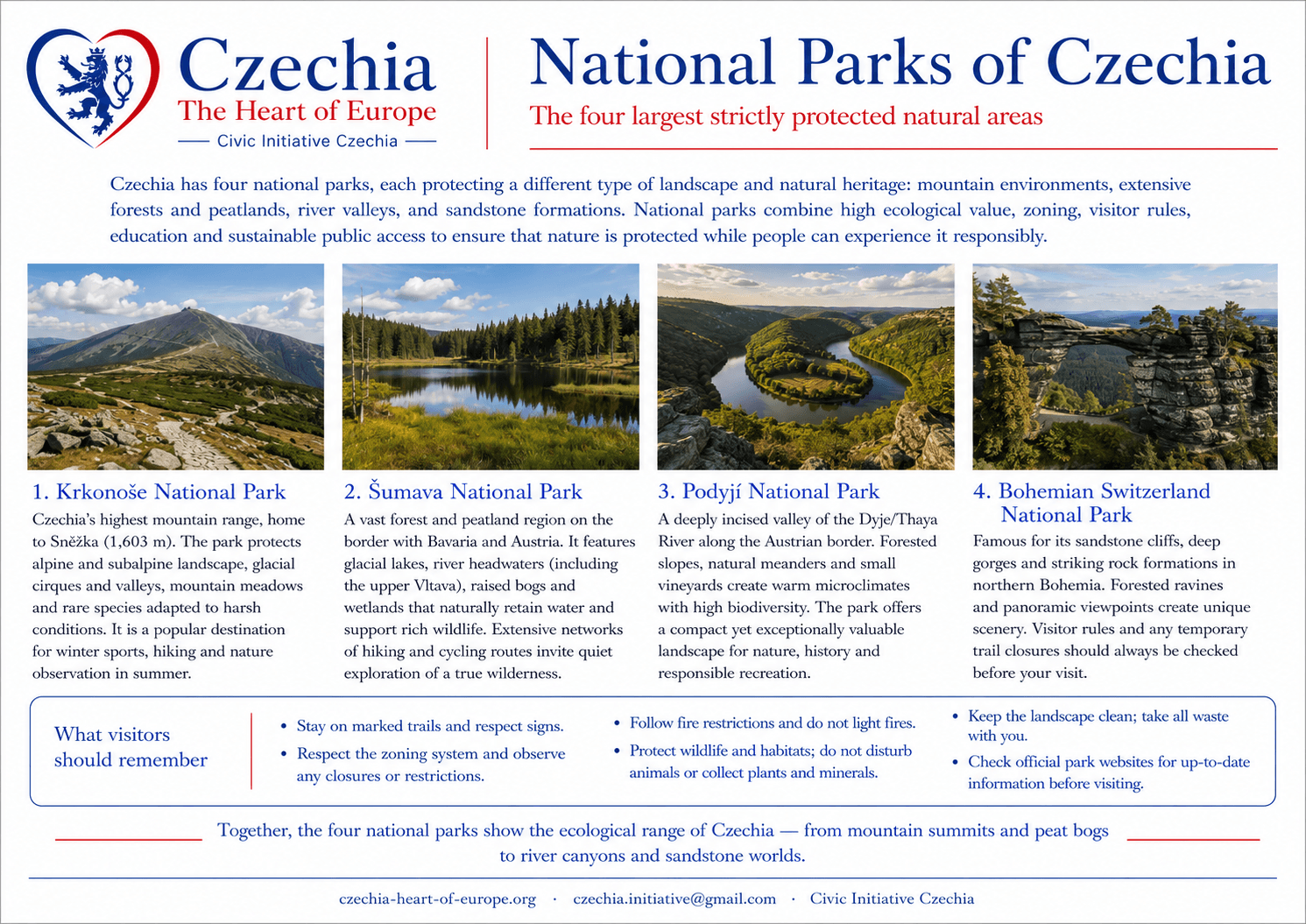
National parks protect the most important large-scale natural areas in Czechia. They are visitor destinations, but their first purpose is conservation. Access may be limited in core zones, on fragile trails, during restoration work or after storms and fires.
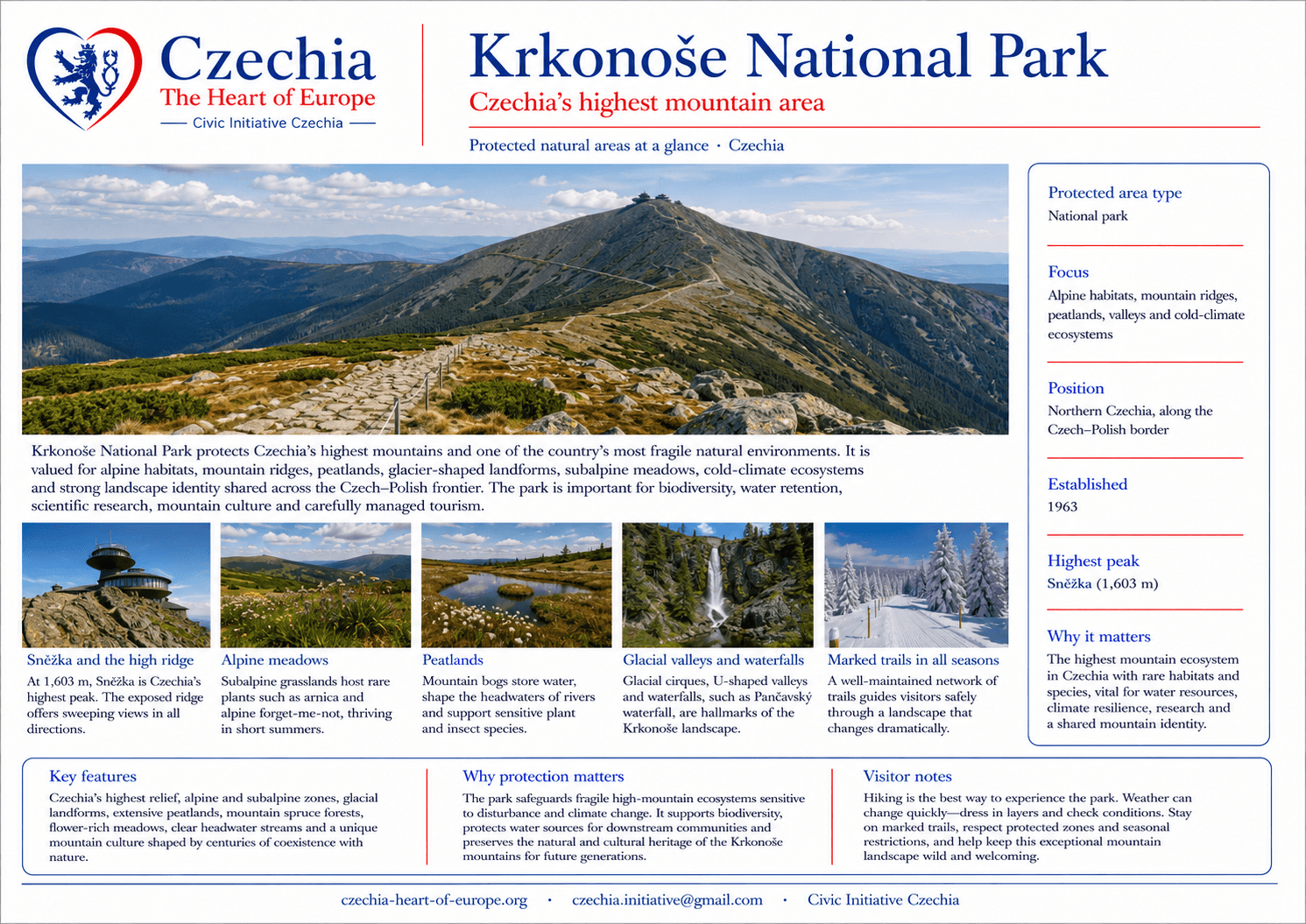
Krkonoše National Park
High mountains and alpine habitatsBest for mountain landscapes, tundra-like habitats, ridges, valleys, peatlands and careful high-season planning.
Šumava National Park
Forests, peatlands and headwatersBest for large forest ecosystems, glacial lakes, peat bogs, quiet-zone rules and cross-border nature context.
Podyjí National Park
River valley and dry habitatsBest for the Dyje river valley, viewpoints, forested slopes, heathlands, vineyards nearby and compact hiking days.
České Švýcarsko National Park
Sandstone gorges and forest recoveryBest for sandstone scenery, gorges, forest renewal, marked access and checking current closures before travel.
Use the carousel for quick orientation before checking the official park, protected-area or visitor page for current access, safety information and local rules.
Krkonoše National Park
Czechia’s highest mountain area, protected for alpine habitats, ridges, peatlands, valleys and fragile high-mountain ecosystems.
Large protected landscapes combine nature, settlements and traditional use.
Protected landscape areas are essential for understanding Czechia’s natural heritage. They often include villages, forests, meadows, farms, castles, caves, wetlands or rock formations. Visitors should expect active land use as well as conservation: protected scenery is often a living landscape, not an empty wilderness.
Rock and sandstone areas
Český ráj, Broumovsko, Kokořínsko, Labské pískovceBest for rock towns, towers, gorges, viewpoints, castles, forests and strict path discipline in fragile terrain.
Karst and caves
Moravian Karst, Bohemian KarstBest for caves, limestone valleys, sinkholes, springs, protected bats and guided cave access.
Mountain and forest areas
Beskydy, Jizerské hory, Jeseníky, Šumava surroundingsBest for forests, ridges, meadows, winter conditions, water sources and biodiversity-sensitive recreation.
Wetlands and ponds
Třeboňsko, PoodříBest for ponds, floodplain habitats, birds, peatlands, fishpond heritage and seasonal wildlife observation.
Steppe and vineyard nature
Pálava and South Moravian sitesBest for limestone hills, dry grasslands, rare plants, vineyards nearby and hot-season planning.
Cross-border landscapes
White Carpathians and border highlandsBest for meadows, orchards, forests, traditional land use and shared conservation across borders.
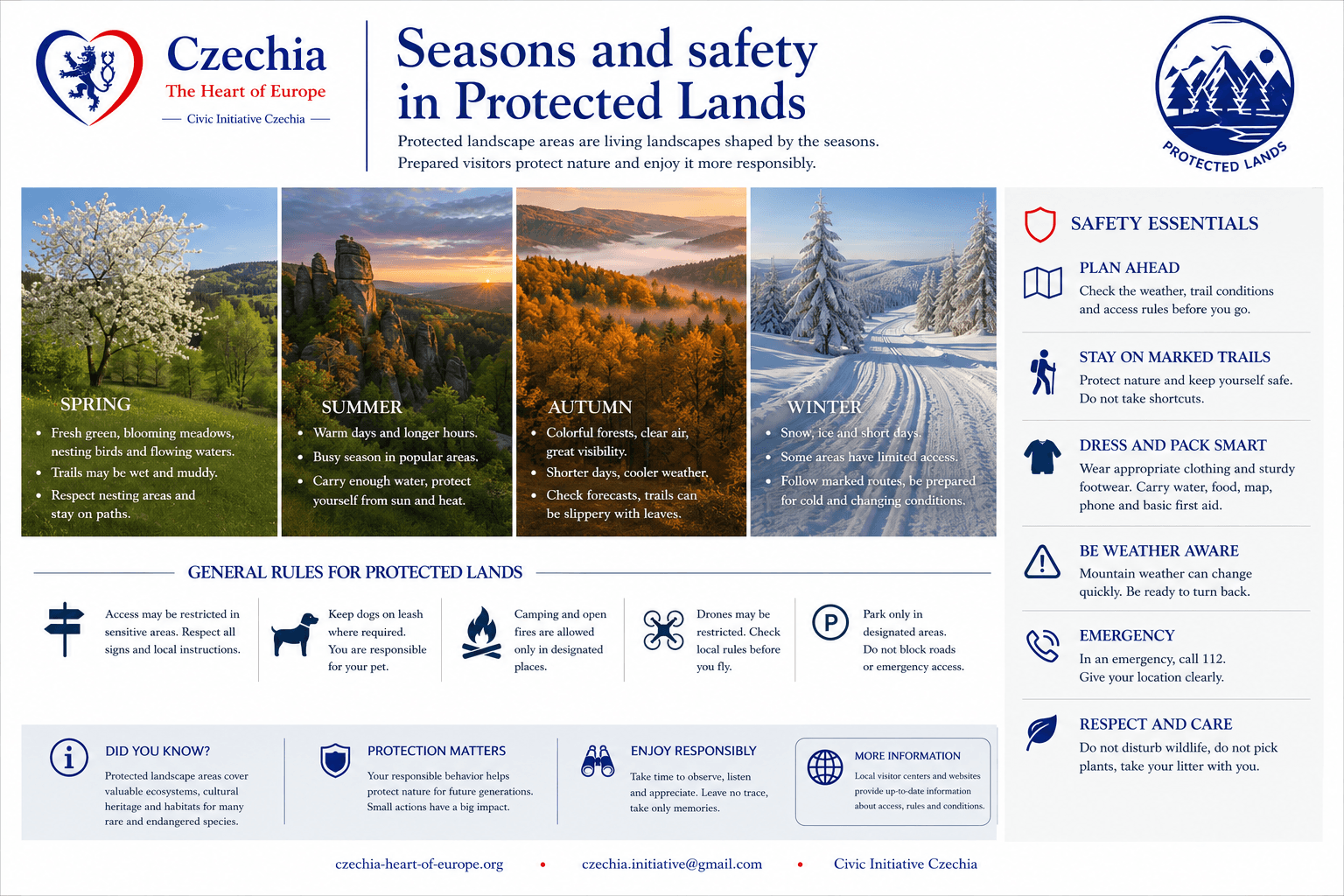
Conditions change quickly in forests, mountains, gorges and wetlands.
A safe visit depends on season and terrain. Mountain weather can change fast. Sandstone paths may be slippery after rain. Caves and gorges can be cold even in summer. Wetlands and river areas may be sensitive during bird nesting or high water. Winter access may require different equipment and more time.
Spring
Nesting and wet trailsSome habitats are sensitive; expect mud, high water and restricted access in selected areas.
Summer
Heat and crowdingPlan water, shade, early starts and respectful movement in busy parks and fragile rock areas.
Autumn
Fog, shorter days and hunting periodsCheck daylight, visibility, local notices and forest warnings before longer walks.
Winter
Ice, snow and mountain riskUse winter equipment, check mountain warnings and avoid closed or unsafe paths.
Protected nature is accessible, but not every place is freely usable.
Most protected areas in Czechia can be visited, but access depends on the category of protection, zoning, season, weather, forest condition and local conservation rules. Marked trails, information boards and visitor centres are part of the protection system. They help visitors move through sensitive places without damaging habitats, slopes, caves, wetlands or nesting areas.
Stay on marked trails
Especially in national parks and reservesLeaving marked trails can damage fragile habitats and may be prohibited in strictly protected zones.
Check current closures
Storms, fire damage, erosion and restoration workSome paths, gorges, forest sections or viewpoints may close temporarily for safety or conservation.
Respect quiet areas
Wildlife needs spaceNoise, drones, dogs off leash and night disturbance can harm wildlife and other visitors.
Responsible visit
Simple rules protect the place and improve the visit.
Responsible nature travel in Czechia is practical: use marked trails, follow local signs, take waste away, keep dogs under control, avoid disturbing wildlife, respect private land and do not enter closed or restoration areas. In caves, gorges, wetlands and mountain zones, small behaviour choices have real conservation effects.
Do
Use official informationPark administrations, visitor centres and protected-area signs give the most reliable local guidance.
Do
Prepare for the terrainCarry water, suitable footwear, offline maps, warm layers and enough time for return.
Do not
Turn nature into a private stageAvoid drones, loud music, off-trail shortcuts, plant picking, feeding animals and climbing where restricted.
Official references
Primary reference pages.
Use official protected-area and park pages for current access, zoning, closures, visitor rules, maps and conservation information. Local conditions can change after storms, fires, floods, restoration work or seasonal protection measures.