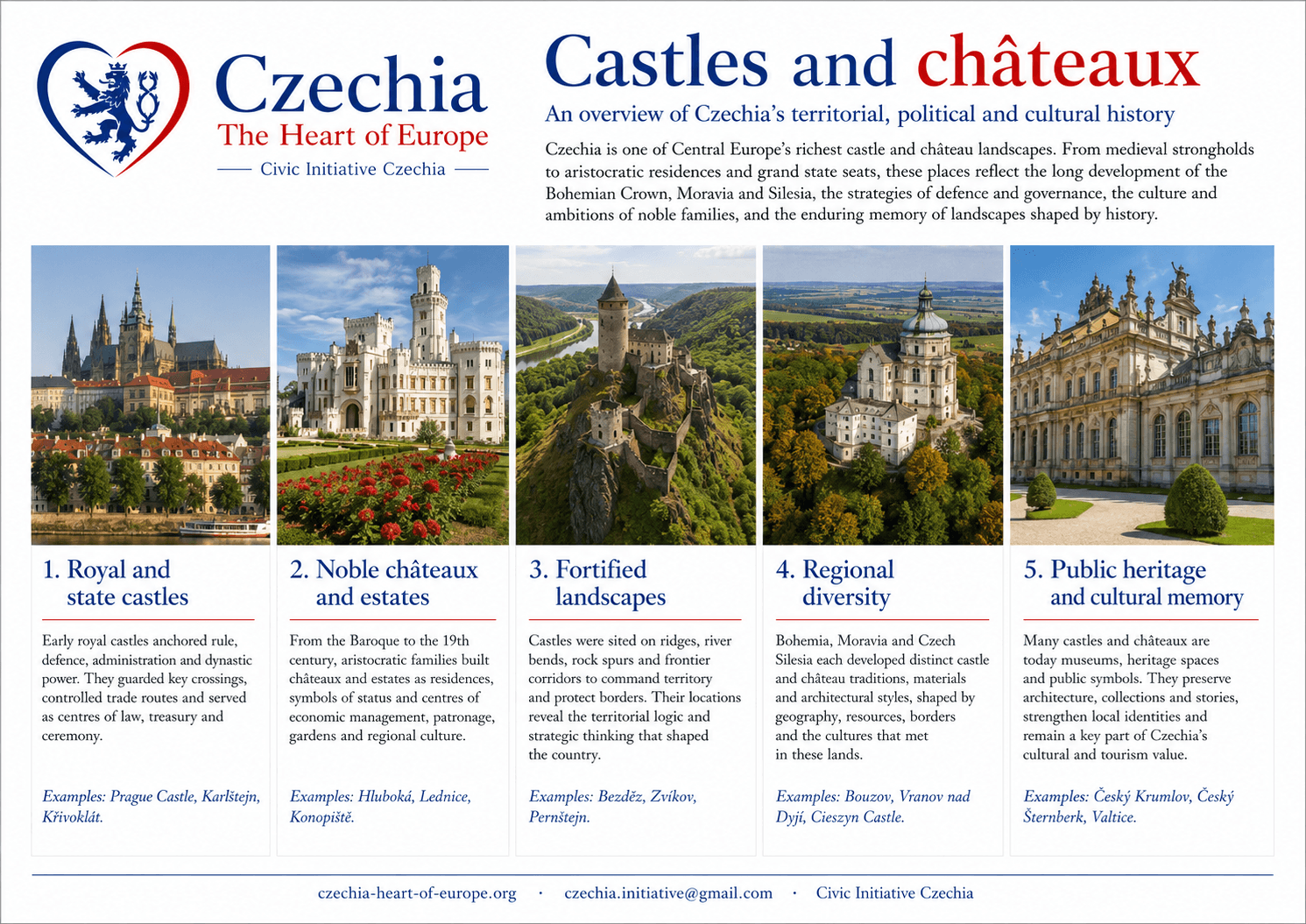
Castles, châteaux, fortified residences and aristocratic estates are among Czechia’s most important heritage categories. They document medieval defence, royal administration, noble landholding, religious authority, residence culture, garden design, collections, conservation practice and regional identity across Bohemia, Moravia and Czech Silesia.
Castles and châteaux as evidence of Czechia’s territorial, political and cultural history.
Czechia has one of Europe’s densest and most varied landscapes of castles, châteaux, ruins, palaces and historic estates. These sites are primary reference points for understanding the country’s medieval defence systems, royal and noble administration, religious institutions, aristocratic residence culture, estate economies, designed landscapes and modern heritage care.
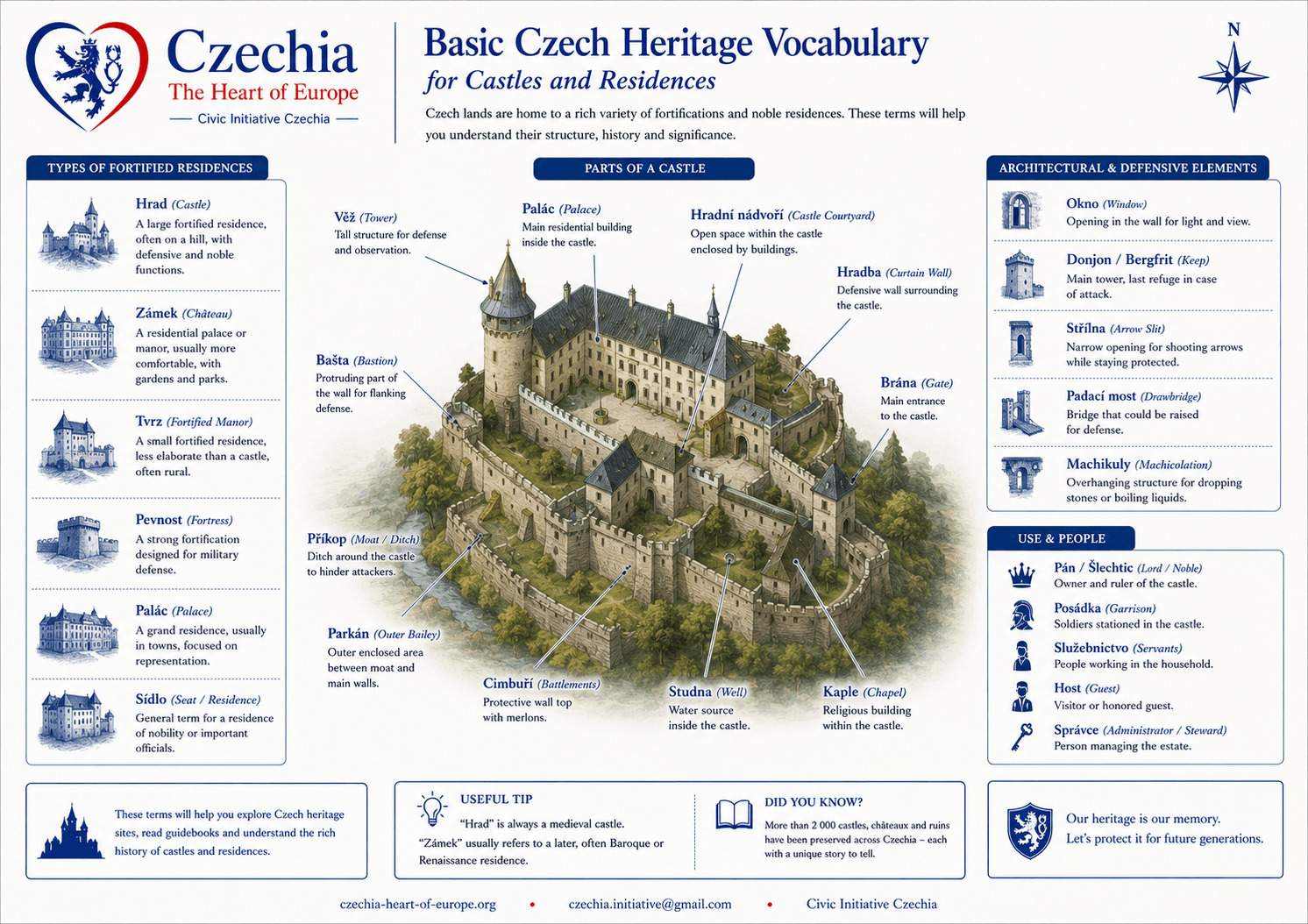
The distinction between hrad and zámek is essential. A hrad usually refers to a castle: a fortified seat connected with defence, authority, control of territory, borders, trade corridors or strategic landscape positions. A zámek usually refers to a château: a representative residence connected with estate management, interiors, gardens, collections, ceremony and aristocratic life. Many sites were rebuilt over centuries, so one monument may preserve several functions at once.
Basic Czech heritage vocabulary for castles and residences.
English terminology does not map perfectly onto Czech heritage categories. The terms below help identify whether a site is primarily fortified, residential, urban, ruined, local or part of a wider estate complex.
Hrad
CastleA fortified seat connected with defence, rule, administration, frontier control, royal property or noble authority.
Zámek
ChâteauA representative residence connected with estate life, interiors, gardens, collecting, ceremony and aristocratic culture.
Zřícenina
RuinPreserved remains that still reveal strategic position, construction logic, historical layout and landscape memory.
Palác
PalaceAn urban or courtly residence connected with high nobility, church authority, ceremonial space or state representation.
Tvrz
Fortified manorA smaller fortified residence, often rural and local, sometimes absorbed into later château or estate complexes.
Areál
ComplexA residence, garden, park, chapel, theatre, farm buildings, water system and designed surroundings read together.
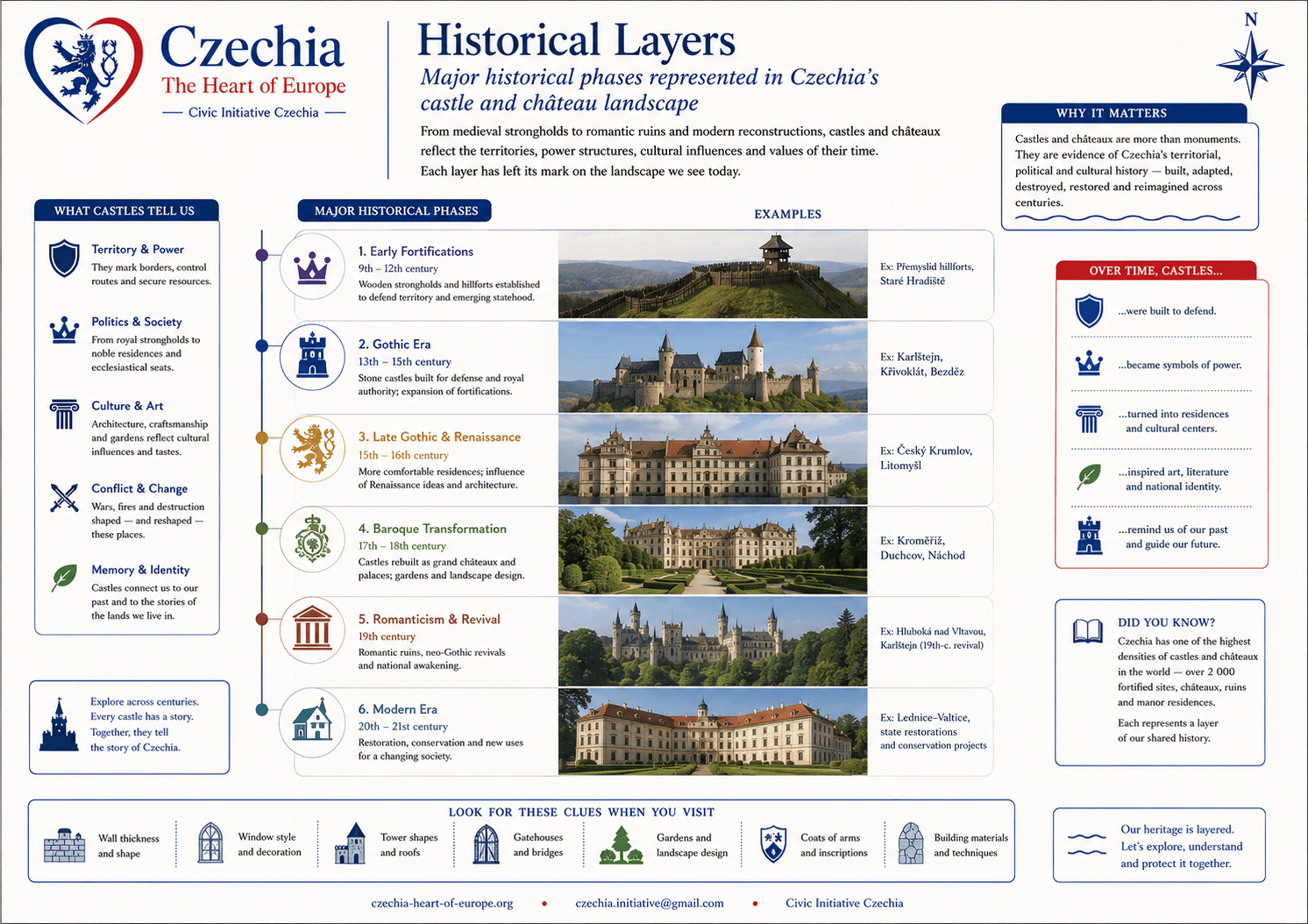
Major historical phases represented in Czechia’s castle and château landscape.
Czechia’s castles and châteaux are rarely single-period monuments. Many preserve Romanesque or Gothic cores, Renaissance residential adaptations, Baroque interiors and gardens, nineteenth-century historicist restorations, twentieth-century changes of ownership and twenty-first-century conservation work. Their value lies in the continuity of these layers.
Medieval
Fortification, rule and territorial controlCastles protected strategic sites, royal property, noble domains, border areas, river crossings, mining zones and communication corridors.
Renaissance / Baroque
Residence, representation and estate cultureMany fortified seats were adapted into residences with courtyards, façades, chapels, libraries, theatres, gardens, parks and collections.
Modern period
Conservation, interpretation and public accessNational and regional heritage care preserves architecture, interiors, archives, collections, gardens and archaeological evidence for public use.
Key examples by function, region and heritage type.
The carousel presents selected sites that illustrate different categories of Czechia’s castle and château heritage: royal castles, aristocratic residences, ecclesiastical estates, UNESCO-linked monuments, cultural landscapes, preserved ruins and nineteenth-century historicist restorations.
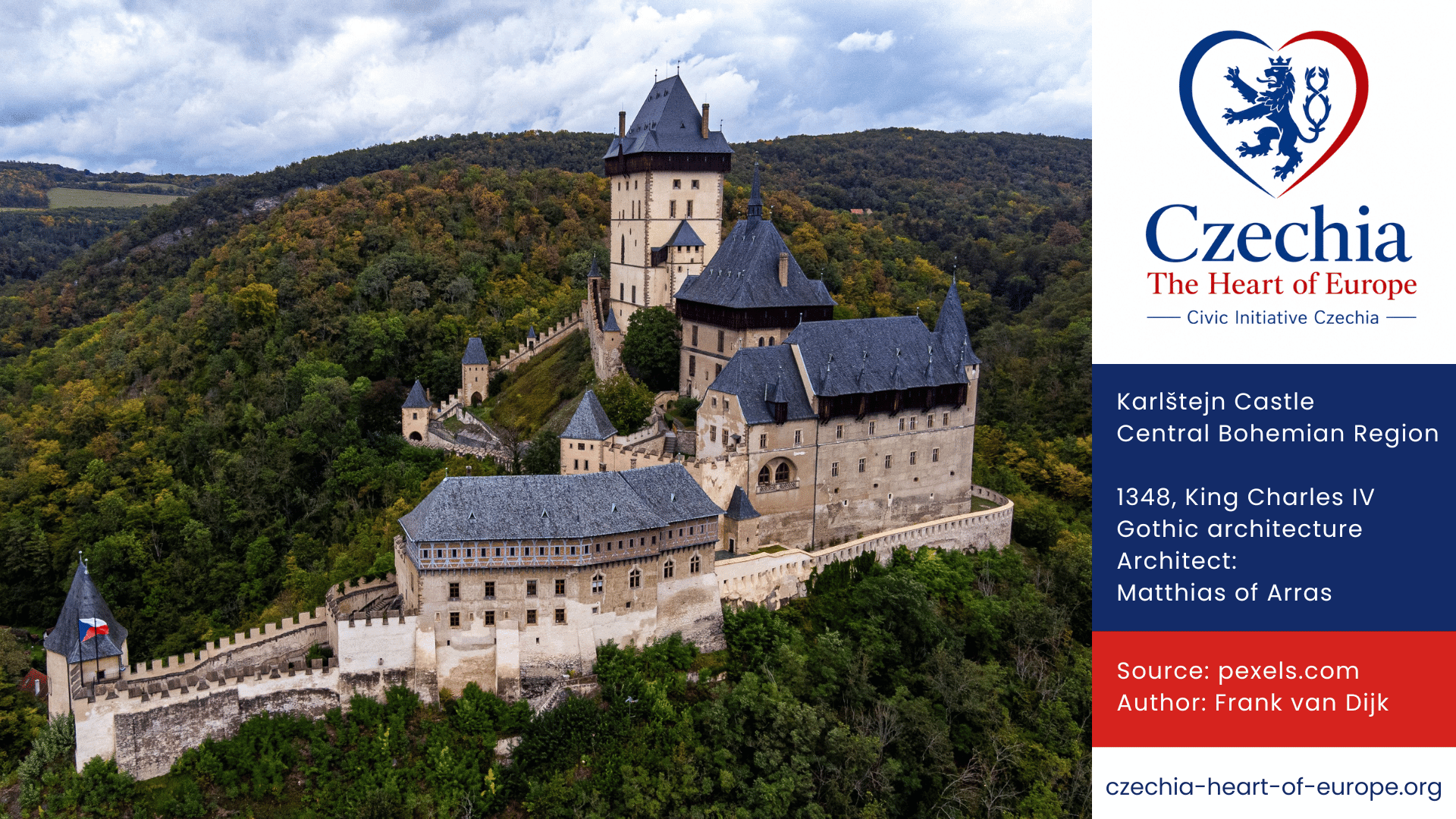
Karlštejn
Royal Gothic castle founded by Charles IV as a high-status seat connected with crown authority, sacred space, imperial symbolism and the political landscape of medieval Bohemia.
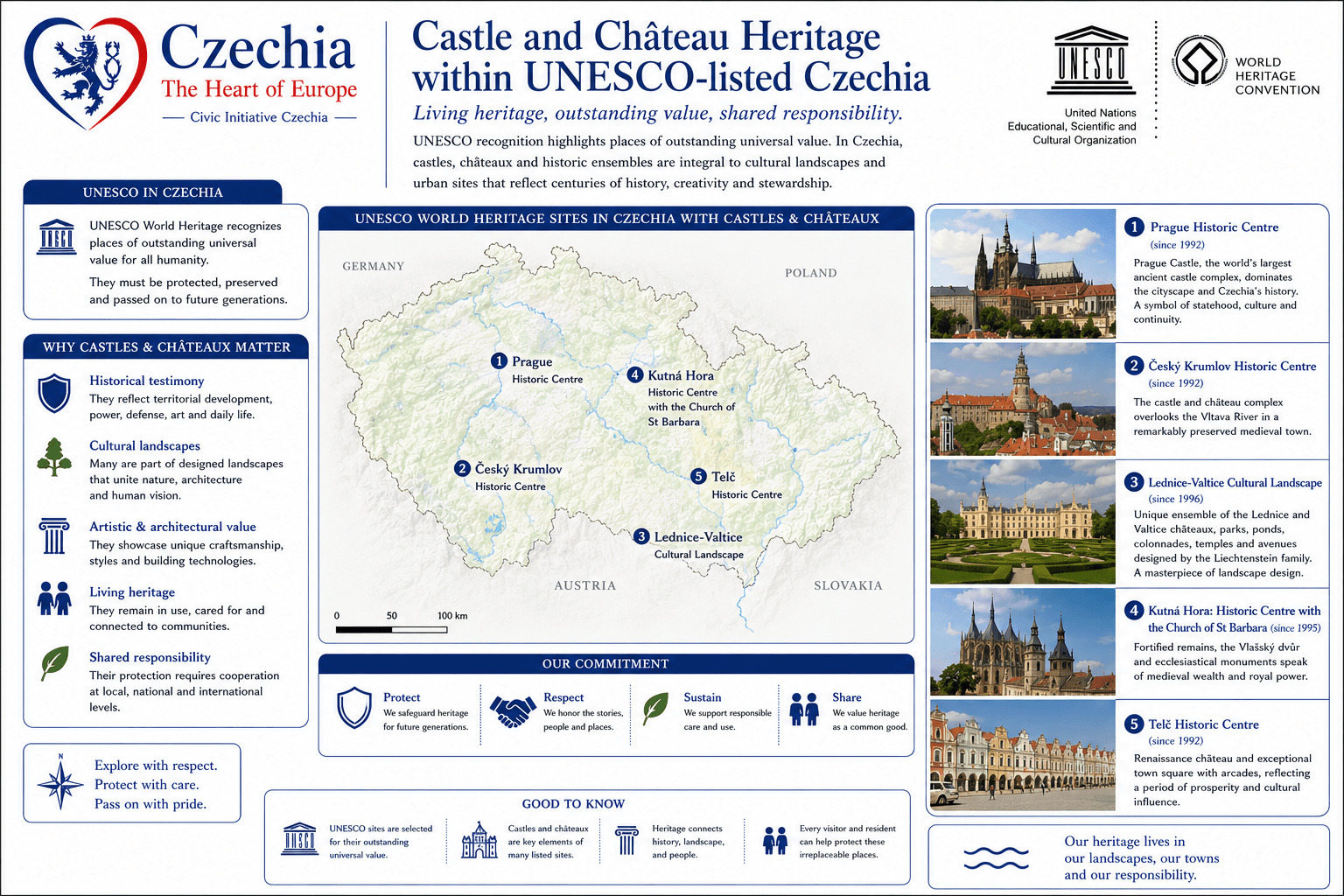
Castle and château heritage within UNESCO-listed Czechia.
Several UNESCO World Heritage properties in Czechia include castles, châteaux, gardens, designed landscapes or residence complexes. Kroměříž represents an archiepiscopal residence with exceptional gardens. Lednice-Valtice represents a large planned aristocratic cultural landscape. Český Krumlov and Litomyšl show how castle and château architecture can form part of wider urban, artistic and historical heritage.
Location, terrain and designed surroundings are part of the heritage value.
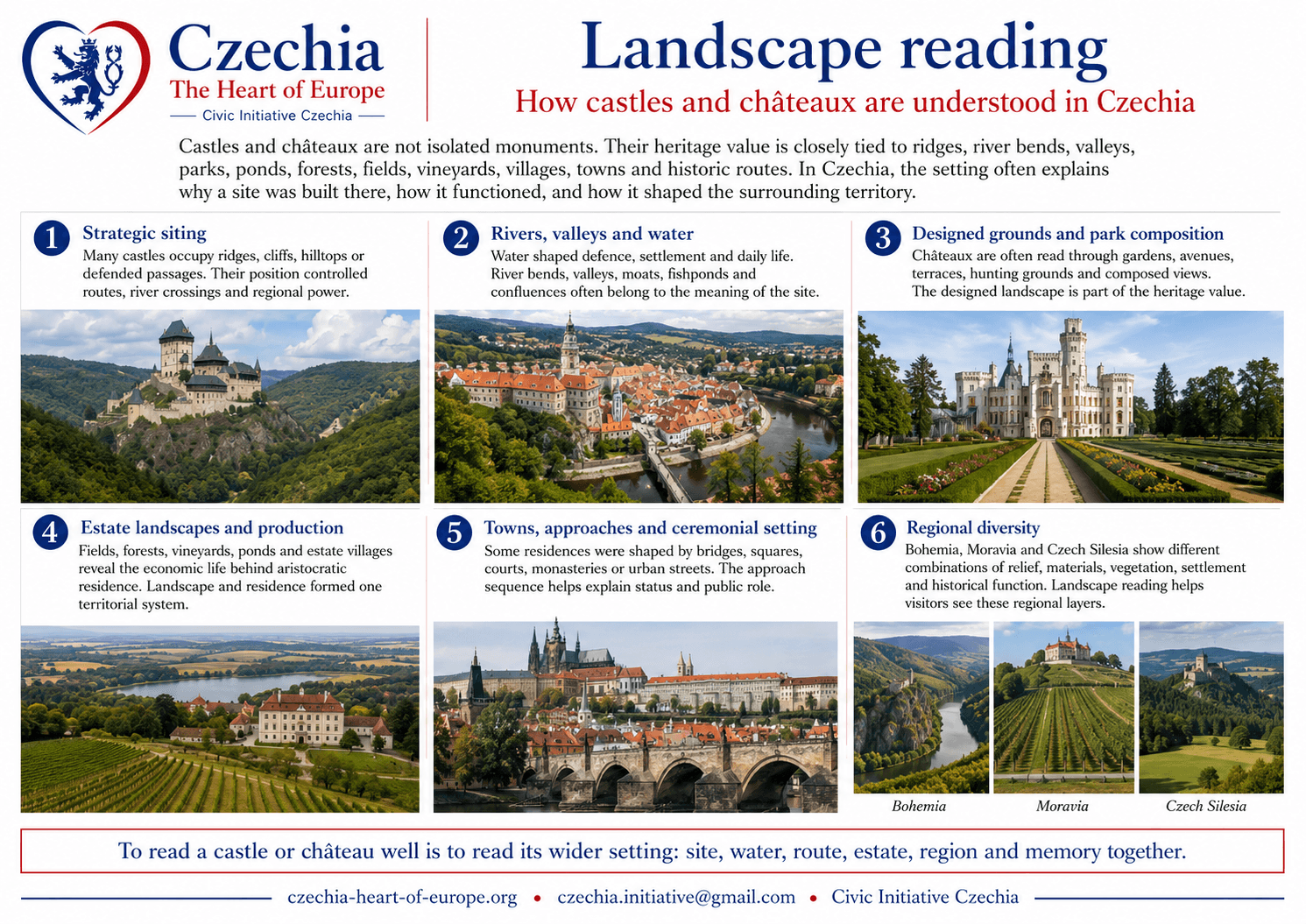
Castles and châteaux should be read together with their setting. A hilltop castle may explain defence and visibility. A river site may explain control of movement, trade or settlement. A château park may explain residence culture, garden design, water management and ceremonial approach. The surrounding landscape is often part of the monument’s historical meaning.
Strategic position
Defence and controlHilltops, rocks, river bends, passes and town edges often reveal why a castle was founded in that place.
Designed estate
Residence and compositionChâteaux are often inseparable from gardens, parks, water features, avenues, courtyards and ceremonial approaches.
Regional identity
Landmark and memoryMany sites function as regional reference points, shaping how towns, landscapes and historical lands are recognized.
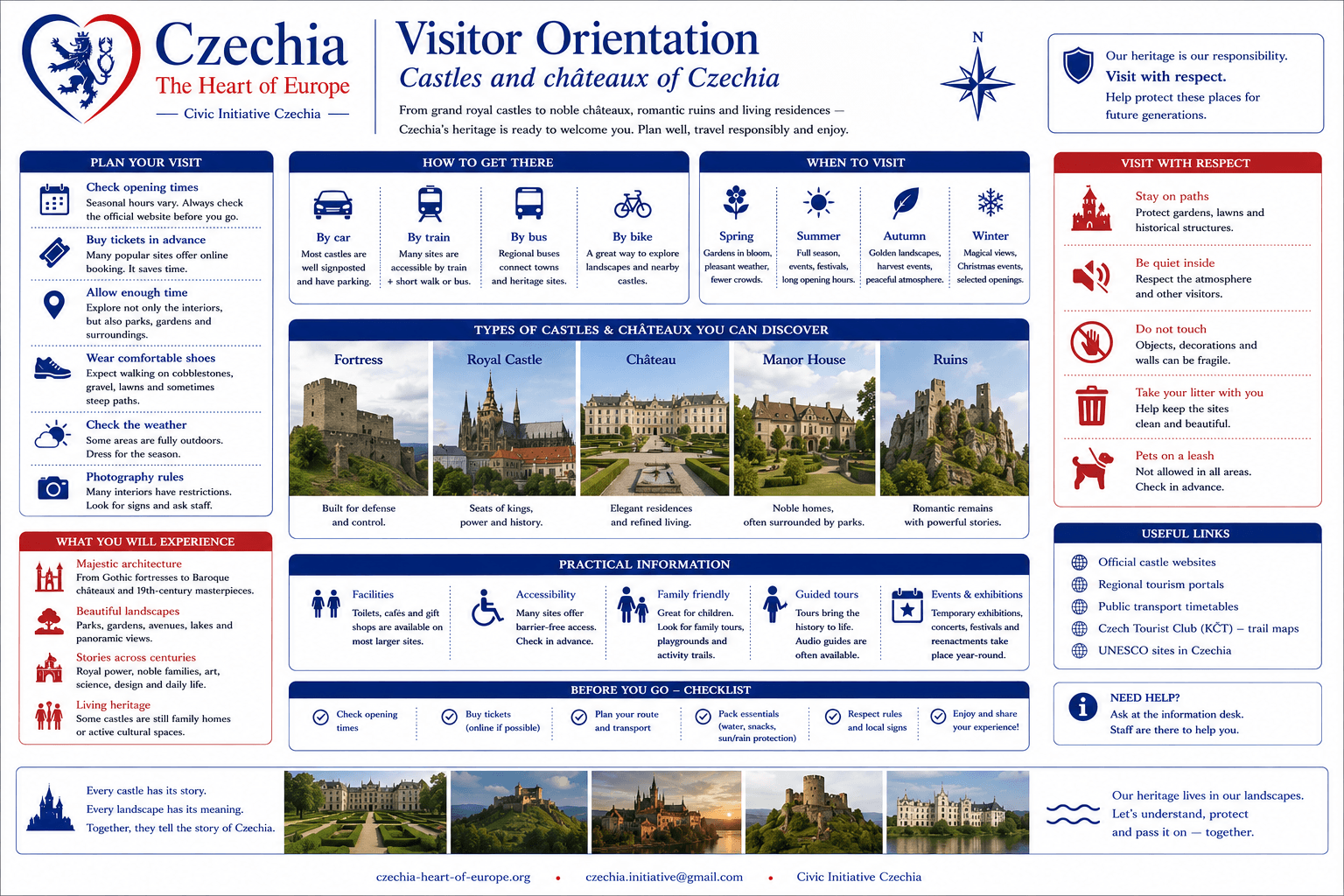
Public access to castles and châteaux depends on conservation needs, seasonal opening, guided-tour systems, restoration work, interior protection and site-specific visitor rules. Official monument pages should be checked before visiting, especially for opening hours, tour languages, photography rules, garden access and temporary closures.
Planning
Check the official monument pageOpening hours, tours, languages, ticketing, closures and accessibility conditions vary by site and season.
Interiors
Follow conservation rulesHistoric interiors may restrict bags, food, touching, flash photography, animals, prams or independent movement.
Grounds
Include gardens and parksCourtyards, gardens, parks, water systems and viewpoints often contain essential historical information.